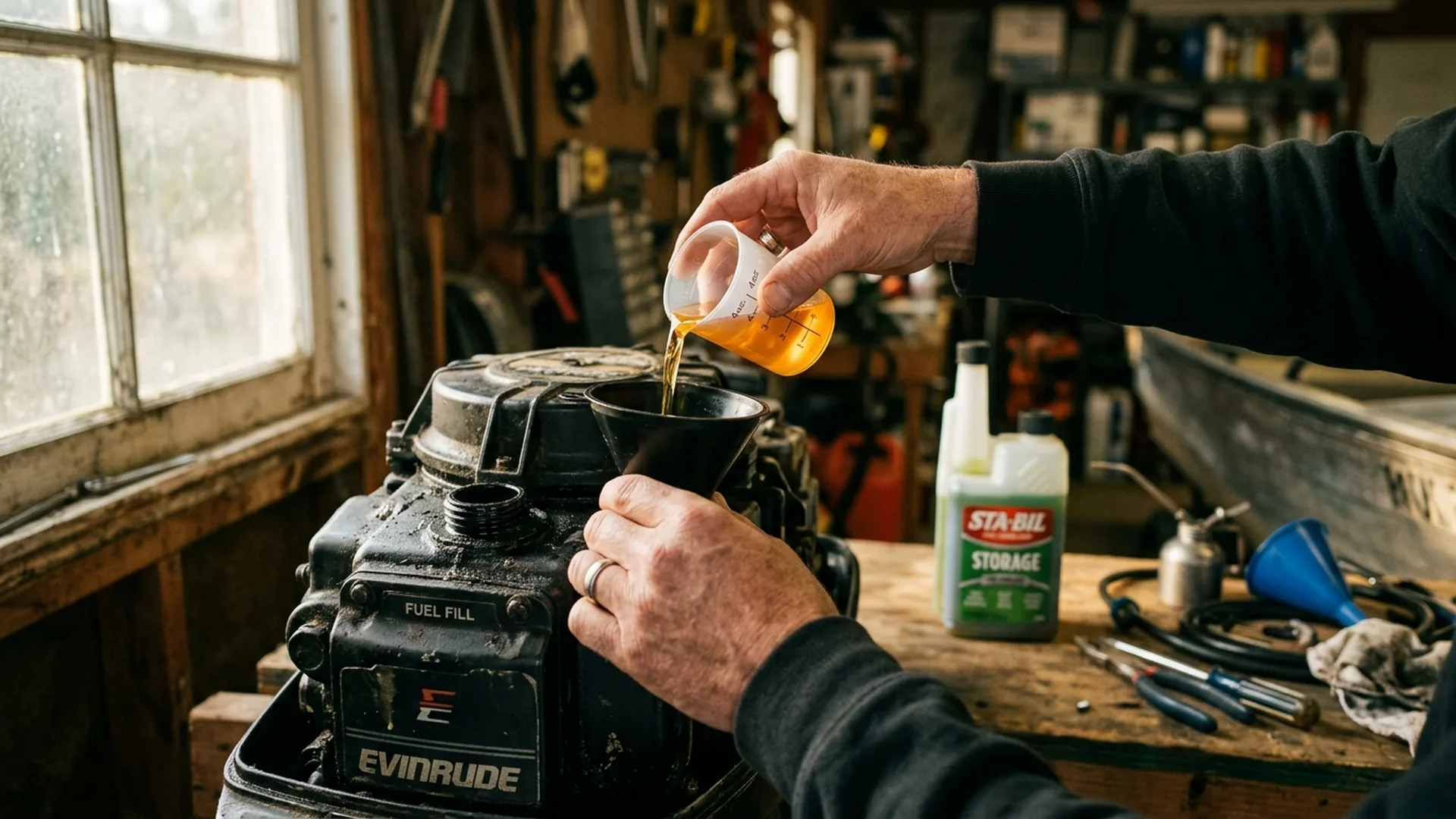
The most common spring problem we hear about is not a dead battery or a frozen pipe. It is an engine that cranks but will not fire, or one that starts rough and stumbles for the first ten minutes. The culprit is almost always the same: fuel that sat too long, untreated, in a tank.
Fuel stabilizer is a small bottle of liquid that costs less than lunch, and it prevents almost all of that. The confusing part is figuring out when you need it, how much to add, and which product actually does the job. This guide answers all of that in plain English so you can pour, run, and store with confidence.
What Is Fuel Stabilizer and What Does It Actually Do?
Fuel stabilizer is an additive you pour into your fuel tank before the engine sits for an extended period. It slows the chemical reactions that break gasoline down over time, and the marine and outdoor-power versions add corrosion inhibitors and moisture control on top of that.
Gasoline is not a stable finished product. It is a blend of light hydrocarbons that keeps evolving from the moment it leaves the refinery, oxidizing on contact with air and slowly losing the volatile components that make it burn cleanly.
Stabilizer works by wrapping antioxidant molecules around the fuel and holding those reactions off, buying you months instead of weeks.
What stabilizer does not do is regenerate fuel that has already broken down. If your tank has been sitting untreated for six months, no bottle is going to restore it. Stabilizer is preventive medicine, not a rescue kit.
Why Does Gasoline Go Bad in Storage?
Two things go wrong when gasoline sits in a tank for months: oxidation and moisture absorption. Modern E10 pump gas makes the second problem much worse than it used to be.
Oxidation is the slow chemical breakdown of the hydrocarbons in gasoline, driven by contact with air. As it progresses, the fuel forms gums and varnishes that coat the inside of carburetors, stick injectors, and gum up small passages.
Fuel storage experts consistently recommend treating any gasoline that will sit longer than about 30 days for this reason. [2]
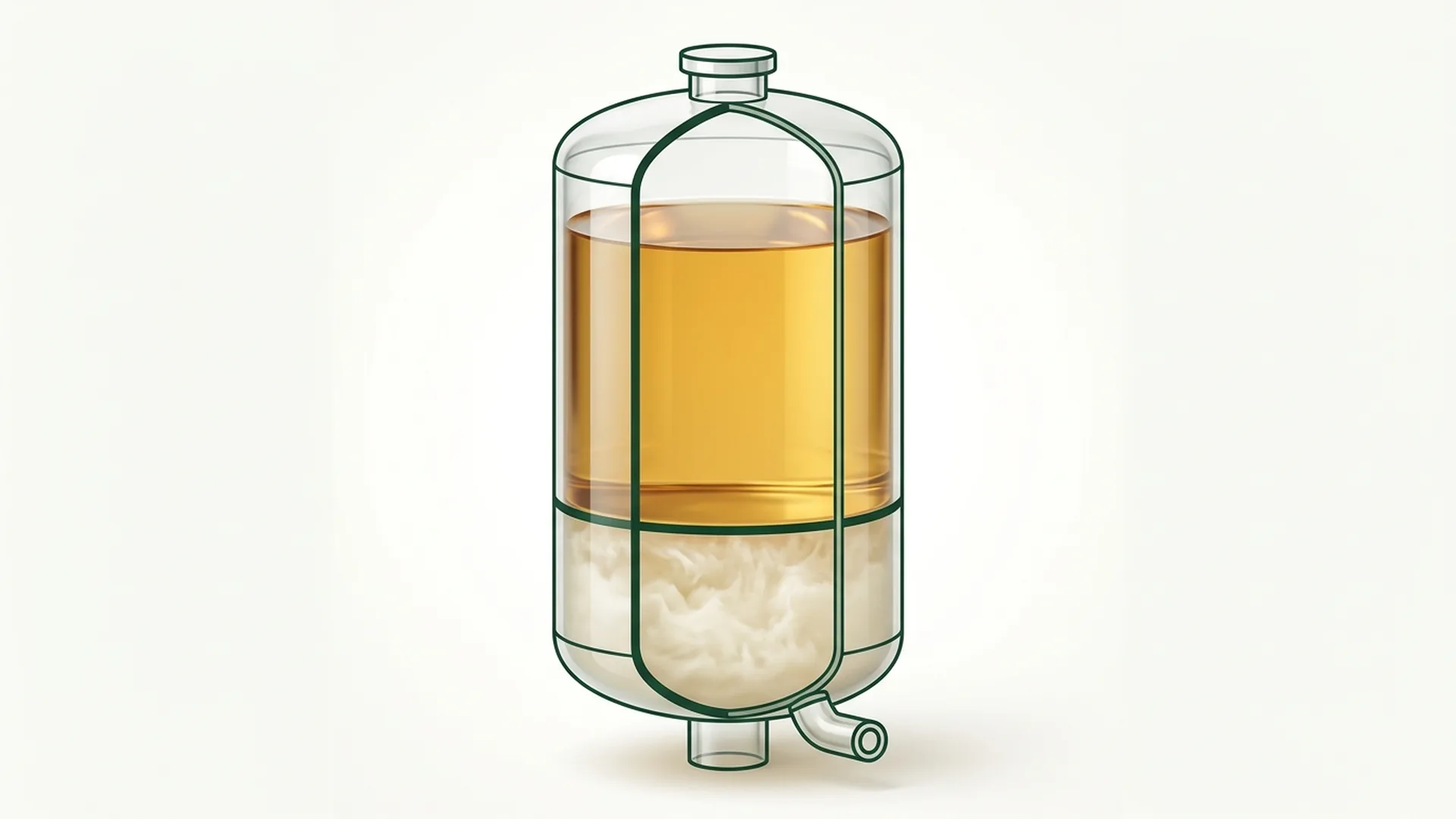
Moisture absorption is the ethanol problem. Ethanol is hygroscopic, meaning it actively pulls water molecules out of humid air. That water gets pulled into the fuel through the tank vent, mixes with the ethanol, and slowly builds up.
Once enough water accumulates, the ethanol and water sink to the bottom of the tank as a separate layer. This is called phase separation, and no additive on the market can reverse it. Once it happens, the only fix is to drain the tank and start over with fresh fuel. [3]
How Long Does Treated vs Untreated Fuel Actually Last?
The difference is dramatic. The rough windows below hold for typical central Minnesota storage conditions.
| Fuel type | Usable storage life | What causes failure |
|---|---|---|
| Untreated E10 (regular pump gas) | 30 to 90 days | Oxidation, phase separation from ethanol absorbing water |
| Ethanol-free gasoline | About 6 months | Slow oxidation only, no ethanol moisture pathway |
| Stabilized E10 (fresh, treated immediately) | 12 to 24 months | Very slow oxidation, moisture still a factor in humid tanks |
| Stabilized ethanol-free | 24+ months | Minimal, if the tank stays sealed and full |
A Minnesota boat layup typically runs from October to May, roughly seven months. Untreated E10 will not survive that window. Stabilized fuel comfortably will, with margin on either end.
Two things matter more than the specific product. First, the fuel has to be fresh when you treat it. Stabilizer added to gas that is already three months old cannot undo the aging that already happened.
Second, the tank should be nearly full before storage, because a half-empty tank is a half-tank of humid air, and that air is what phase-separates ethanol fuel.
How Do You Use Fuel Stabilizer Correctly?
The whole routine takes about fifteen minutes and it is the same on a boat, an RV, a generator, or a snowblower.
- Start with fresh fuel. Fill the tank with gas that is no more than a week or two old, ideally from a station with high turnover.
- Fill to about 95%. Leave a small expansion gap but no meaningful airspace. A nearly full tank means almost no humid air to pull moisture from.
- Add stabilizer at the label ratio. For STA-BIL storage formula, that is roughly one ounce per 2.5 gallons of gasoline. Marine and small-engine formulas have their own ratios: read the bottle.
- Run the engine 5 to 10 minutes. This pulls treated fuel through the carburetor, injectors, fuel pump, and fuel lines. If you skip this step, only the tank is protected. The rest of the fuel system sits full of untreated gas.
- Shut it down and store. On outboards, follow the manufacturer’s guidance about fogging the cylinders as a separate step. On carbureted engines, some owners drain the carburetor bowl as a belt-and-suspenders move.
That is the whole job. Skipping any step, especially the “run the engine” part, is where most owners get in trouble.
Which Stabilizer Should You Buy for Boats vs RVs vs Small Engines?
Most brand-name stabilizers do the core job well. Where they differ is in secondary additives designed for specific environments.
For Boats and Marine Engines
Buy a marine-specific stabilizer or a product labeled as dual-purpose. Marine formulas include extra corrosion inhibitors for aluminum tanks and metal fuel components, plus moisture-control additives geared toward the wet environment boats live in.
Mercury Marine’s outboard winterization guide treats fuel stabilizer as a standard step alongside fogging oil and cooling-system drain. [4]
For RVs and Generators
Standard storage-grade stabilizer works well for RV gasoline engines and onboard generators. The environment is drier than a boat’s, so basic oxidation protection is the priority. If your RV also has a diesel generator, use a diesel-specific stabilizer and biocide instead, because diesel storage problems are different.
For Small Engines (Snowblower, Mower, Chainsaw)
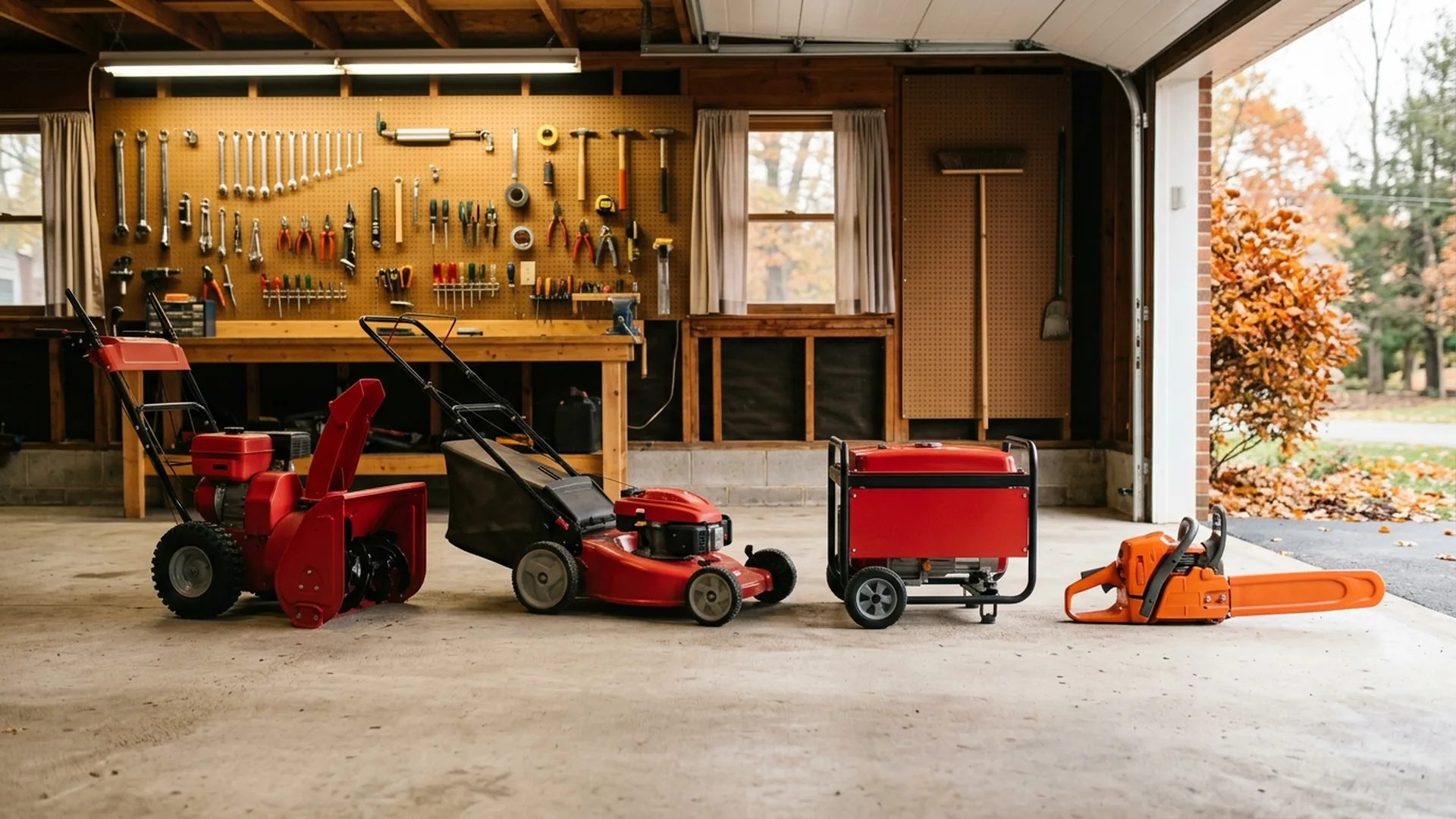
Use a small-engine or ethanol-treatment formula. These are calibrated for the tiny fuel volumes and often add detergents to keep the fine passages in a small carburetor clean. The same rule applies: treat before the seasonal layup, not after the engine has already sat.
What Happens If You Skip It?
You get to meet the shop, is the short version. Skipped fuel treatment shows up as one of a handful of predictable failures.
- Hard starting or no start. The most common outcome. Aged fuel loses its light, volatile components and does not ignite reliably in cold cylinders.
- Rough running and stumbling. Varnish deposits in the carburetor jets throw off the fuel-air mixture, and the engine loses power or stalls at idle.
- Clogged injectors on fuel-injected engines. Injector cleaning or replacement can run several hundred dollars per cylinder on a marine engine.
- Full tank drain and clean-out from phase separation. Once ethanol and water have separated, you are looking at a fuel system flush before the engine will run properly again.
- Corrosion in the fuel system. Water sitting in the bottom of an aluminum tank causes pitting over time, and pitted tanks eventually need replacement.
BoatUS estimates that improper winter storage causes more than $50 million in preventable damage to boats across the country every year. Not all of that is fuel-related, but fuel-related repairs are one of the top spring service categories. [5]
Compare that to a $10 bottle of stabilizer that lasts several seasons. The math is not close.
What We See at Due North Storage
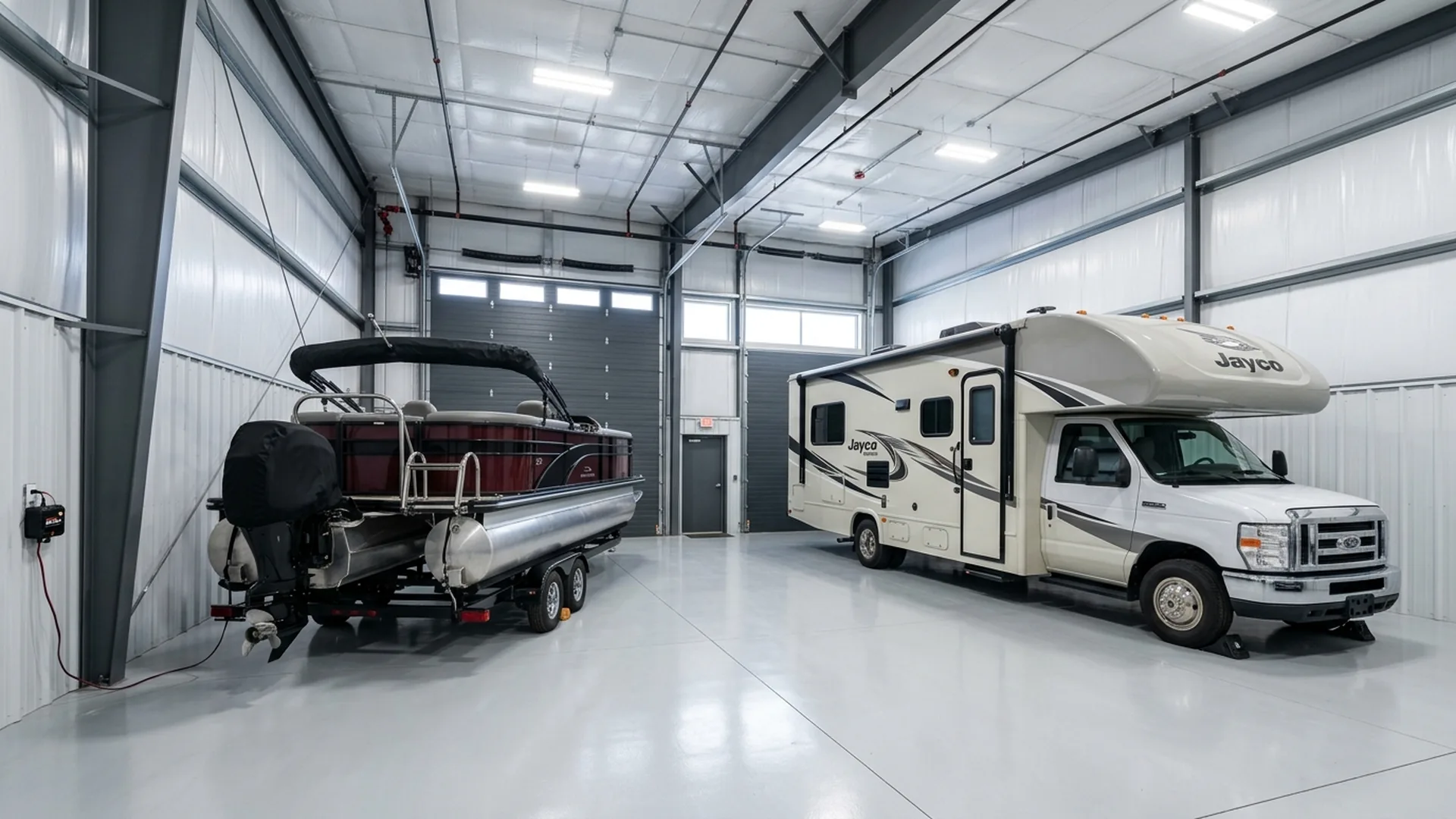
The pattern is remarkably consistent every spring. Customers who winterized carefully, including treating the fuel and running the engine, roll out clean on the first warm Saturday. Customers who parked the rig full of untreated pump gas in October come back for a jump-start or a tow.
The stabilizer step is the one owners most often forget, because it seems minor compared to draining the cooling system or fogging the cylinders. It is not minor. Fuel is what actually gets the engine running in April, and fuel is what most commonly fails after six months in the dark.
Pair fuel treatment with the rest of the storage prep. If you are also winterizing an RV or a boat, add stabilizer while you are already elbow-deep in the checklist. It takes five extra minutes and it protects everything downstream of the tank.
Store Indoors, Start Clean in Spring
Due North Storage offers indoor units up to 14×40 with electricity included, off Highway 10 in the St. Cloud area. Pair proper winterization with a dry, protected bay and skip the spring surprises.
Frequently Asked Questions
How long does fuel stabilizer keep gas fresh?
STA-BIL’s storage formula keeps fresh gasoline usable for up to 24 months when added at the right ratio and treated immediately after purchase. Other marine and small-engine stabilizers offer similar 12 to 24 month windows.
The key word is fresh: stabilizer preserves good fuel, it does not restore fuel that has already broken down.
Do I need fuel stabilizer for a boat or RV that sits over winter?
Yes, and it is one of the cheapest insurance policies you can buy for a stored engine. Untreated E10 gasoline can start breaking down in as little as 30 days.
Over a Minnesota five to seven month layup it can gum up carburetors, clog injectors, or phase-separate. A few dollars of stabilizer prevents a repair bill.
Can I use car fuel stabilizer in my boat?
You can use a general-purpose stabilizer in a boat, but a marine-specific product is a better fit because marine formulas add corrosion inhibitors and moisture control for the wet, humid environment boats live in.
If the label says marine or dual-purpose, you are covered.
What is phase separation and can stabilizer prevent it?
Phase separation happens when ethanol fuel absorbs enough water from the air that the ethanol and water sink to the bottom of the tank as a separate layer. No additive can reverse it, so the tank must be drained.
Stabilizer helps by slowing moisture uptake, but a nearly full tank is the strongest defense.
Should I store the tank full or empty?
Full, to about 95 percent. A nearly full tank leaves almost no room for the humid air that causes condensation.
Empty tanks let air move in and out with temperature swings, and that airflow is exactly what pulls moisture into the fuel.
How do I add fuel stabilizer correctly?
Add stabilizer to a nearly full tank of fresh fuel at the ratio on the label (commonly one ounce per 2.5 gallons for STA-BIL), then run the engine for five to ten minutes so treated fuel reaches the carburetor, injectors, and fuel lines.
Treating only the tank leaves untreated fuel in the rest of the system, which defeats the point.
Can old, untreated gas be saved with stabilizer?
Not really. Stabilizer preserves fresh fuel; it does not restore fuel that has already oxidized or phase-separated.
If your tank has been sitting untreated for six months, drain it and refill with fresh treated fuel rather than trying to rescue what is in there.
Final Thoughts
Fuel stabilizer is one of the highest-return five minutes you can spend on a stored engine. It costs less than a coffee, prevents the most common spring failure by a wide margin, and works across boats, RVs, generators, and every small engine in the garage.
Treat fresh fuel, top the tank to 95%, run the engine long enough to pull the treated gas through the whole fuel system, and shut it down for the season. Do that, and April starts with a first-try startup instead of a service bill.
Indoor Boat & RV Storage in Central Minnesota
Clean, dry indoor units up to 14×40 with electricity included, just off Highway 10 near Saint Cloud and Little Falls. Reserve your spot before the fall rush.
Sources:
[1] State of Hawaii DLNR, Division of Boating and Ocean Recreation. Ethanol And Your Marine Engine (E-10). Retrieved 2026-07-28.
[2] Gold Eagle. STA-BIL Storage Fuel Stabilizer (Product & Usage Guidance). Retrieved 2026-07-28.
[3] U.S. Department of Energy, Alternative Fuels Data Center. Ethanol Fuel Basics. Retrieved 2026-07-28.
[4] Mercury Marine. How to Winterize Your Outboard. Retrieved 2026-07-28.
[5] BoatUS. To Winterize Or Not To Winterize? 2025. Retrieved 2026-07-28.
Leave a Reply