Category: Uncategorized

  • Fuel Stabilizer 101: Protecting Your Engine Through Months of Storage

    Fuel Stabilizer 101: Protecting Your Engine Through Months of Storage

    The most common spring problem we hear about is not a dead battery or a frozen pipe. It is an engine that cranks but will not fire, or one that starts rough and stumbles for the first ten minutes. The culprit is almost always the same: fuel that sat too long, untreated, in a tank.

    Fuel stabilizer is a small bottle of liquid that costs less than lunch, and it prevents almost all of that. The confusing part is figuring out when you need it, how much to add, and which product actually does the job. This guide answers all of that in plain English so you can pour, run, and store with confidence.

    What Is Fuel Stabilizer and What Does It Actually Do?

    Fuel stabilizer is an additive you pour into your fuel tank before the engine sits for an extended period. It slows the chemical reactions that break gasoline down over time, and the marine and outdoor-power versions add corrosion inhibitors and moisture control on top of that.

    Gasoline is not a stable finished product. It is a blend of light hydrocarbons that keeps evolving from the moment it leaves the refinery, oxidizing on contact with air and slowly losing the volatile components that make it burn cleanly.

    Stabilizer works by wrapping antioxidant molecules around the fuel and holding those reactions off, buying you months instead of weeks.

    What stabilizer does not do is regenerate fuel that has already broken down. If your tank has been sitting untreated for six months, no bottle is going to restore it. Stabilizer is preventive medicine, not a rescue kit.

    Why Does Gasoline Go Bad in Storage?

    Two things go wrong when gasoline sits in a tank for months: oxidation and moisture absorption. Modern E10 pump gas makes the second problem much worse than it used to be.

    Oxidation is the slow chemical breakdown of the hydrocarbons in gasoline, driven by contact with air. As it progresses, the fuel forms gums and varnishes that coat the inside of carburetors, stick injectors, and gum up small passages.

    Fuel storage experts consistently recommend treating any gasoline that will sit longer than about 30 days for this reason. [2]

    Moisture absorption is the ethanol problem. Ethanol is hygroscopic, meaning it actively pulls water molecules out of humid air. That water gets pulled into the fuel through the tank vent, mixes with the ethanol, and slowly builds up.

    Once enough water accumulates, the ethanol and water sink to the bottom of the tank as a separate layer. This is called phase separation, and no additive on the market can reverse it. Once it happens, the only fix is to drain the tank and start over with fresh fuel. [3]
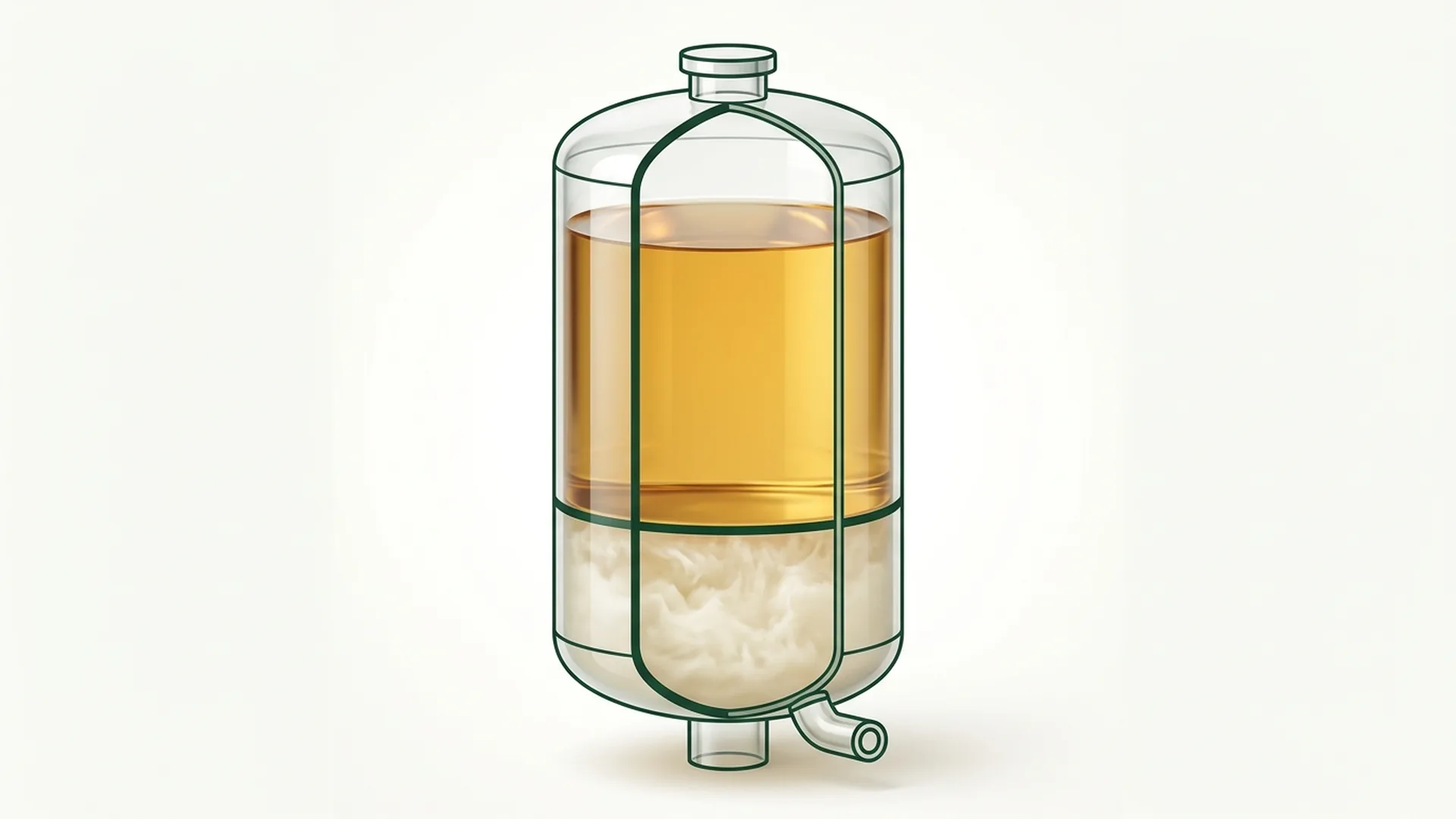
    Cutaway of a fuel tank showing clear gasoline over a cloudy ethanol and water layer settled at the bottom
    Phase separation: once ethanol pulls in enough water, it drops out of the fuel as a separate milky layer at the bottom of the tank.

    How Long Does Treated vs Untreated Fuel Actually Last?

    The difference is dramatic. The rough windows below hold for typical central Minnesota storage conditions.

    Fuel type Usable storage life What causes failure
    Untreated E10 (regular pump gas) 30 to 90 days Oxidation, phase separation from ethanol absorbing water
    Ethanol-free gasoline About 6 months Slow oxidation only, no ethanol moisture pathway
    Stabilized E10 (fresh, treated immediately) 12 to 24 months Very slow oxidation, moisture still a factor in humid tanks
    Stabilized ethanol-free 24+ months Minimal, if the tank stays sealed and full

    A Minnesota boat layup typically runs from October to May, roughly seven months. Untreated E10 will not survive that window. Stabilized fuel comfortably will, with margin on either end.

    Two things matter more than the specific product. First, the fuel has to be fresh when you treat it. Stabilizer added to gas that is already three months old cannot undo the aging that already happened.

    Second, the tank should be nearly full before storage, because a half-empty tank is a half-tank of humid air, and that air is what phase-separates ethanol fuel.

    How Do You Use Fuel Stabilizer Correctly?

    The whole routine takes about fifteen minutes and it is the same on a boat, an RV, a generator, or a snowblower.

    1. Start with fresh fuel. Fill the tank with gas that is no more than a week or two old, ideally from a station with high turnover.
    2. Fill to about 95%. Leave a small expansion gap but no meaningful airspace. A nearly full tank means almost no humid air to pull moisture from.
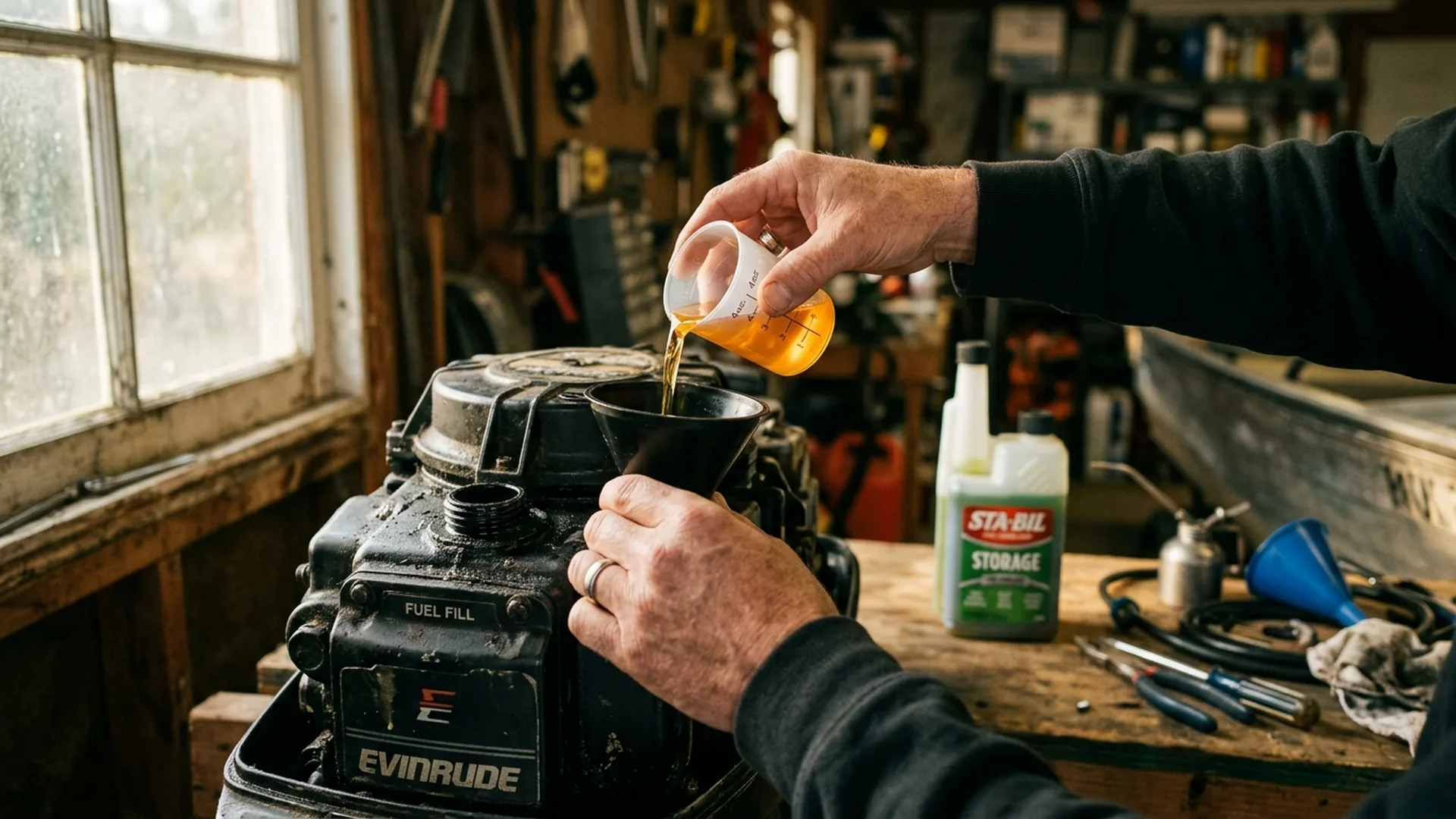
    3. Add stabilizer at the label ratio. For STA-BIL storage formula, that is roughly one ounce per 2.5 gallons of gasoline. Marine and small-engine formulas have their own ratios: read the bottle.
    4. Run the engine 5 to 10 minutes. This pulls treated fuel through the carburetor, injectors, fuel pump, and fuel lines. If you skip this step, only the tank is protected. The rest of the fuel system sits full of untreated gas.
    5. Shut it down and store. On outboards, follow the manufacturer’s guidance about fogging the cylinders as a separate step. On carbureted engines, some owners drain the carburetor bowl as a belt-and-suspenders move.

    That is the whole job. Skipping any step, especially the “run the engine” part, is where most owners get in trouble.

    Which Stabilizer Should You Buy for Boats vs RVs vs Small Engines?

    Most brand-name stabilizers do the core job well. Where they differ is in secondary additives designed for specific environments.
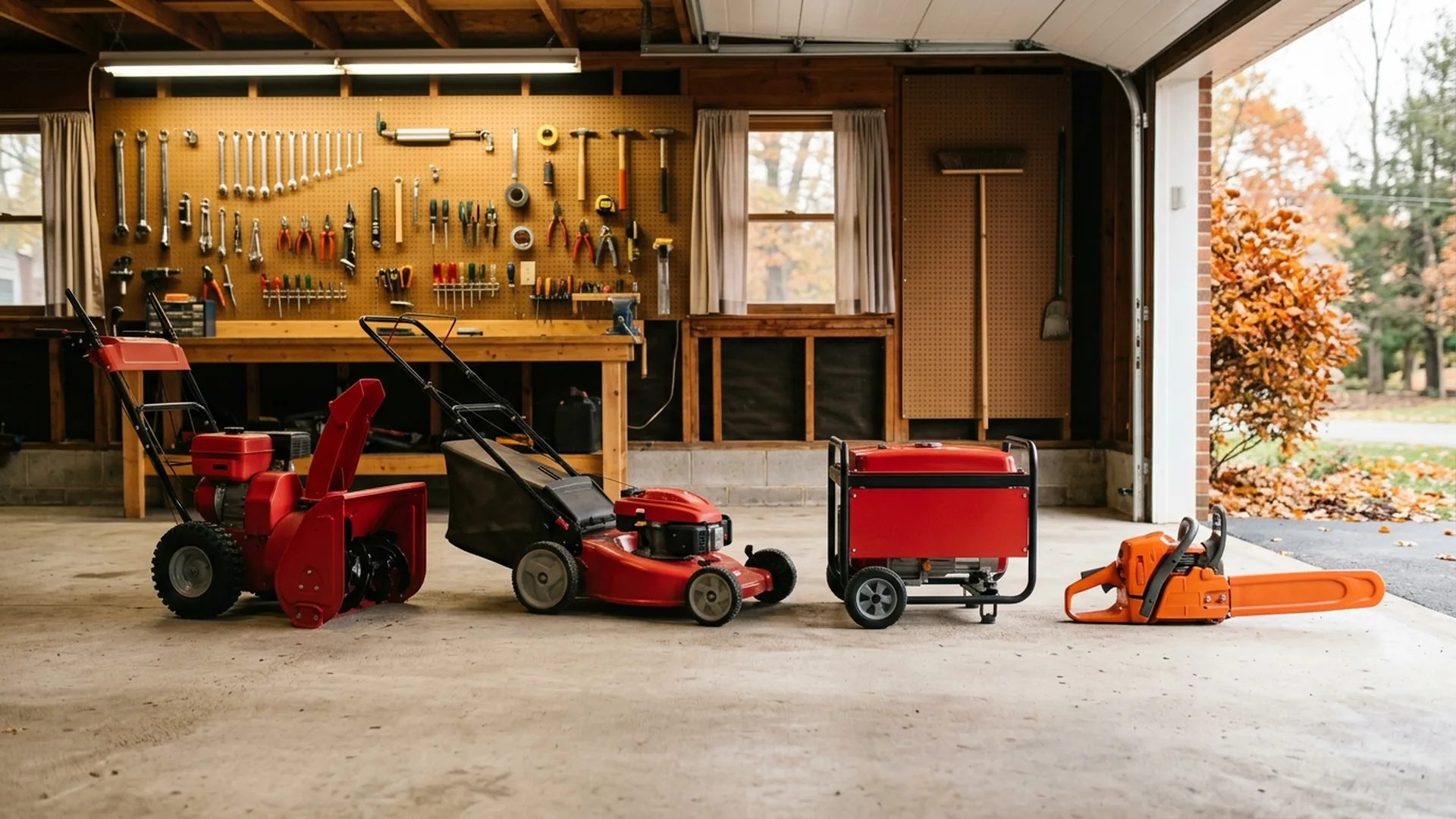
    A snowblower, lawn mower, portable generator, and chainsaw lined up in a garage with fuel stabilizer bottles
    The same treat-before-layup rule covers every small engine in the garage: snowblower, mower, generator, and chainsaw.

    For Boats and Marine Engines

    Buy a marine-specific stabilizer or a product labeled as dual-purpose. Marine formulas include extra corrosion inhibitors for aluminum tanks and metal fuel components, plus moisture-control additives geared toward the wet environment boats live in.

    Mercury Marine’s outboard winterization guide treats fuel stabilizer as a standard step alongside fogging oil and cooling-system drain. [4]

    For RVs and Generators

    Standard storage-grade stabilizer works well for RV gasoline engines and onboard generators. The environment is drier than a boat’s, so basic oxidation protection is the priority. If your RV also has a diesel generator, use a diesel-specific stabilizer and biocide instead, because diesel storage problems are different.

    For Small Engines (Snowblower, Mower, Chainsaw)

    Use a small-engine or ethanol-treatment formula. These are calibrated for the tiny fuel volumes and often add detergents to keep the fine passages in a small carburetor clean. The same rule applies: treat before the seasonal layup, not after the engine has already sat.

    What Happens If You Skip It?

    You get to meet the shop, is the short version. Skipped fuel treatment shows up as one of a handful of predictable failures.

    • Hard starting or no start. The most common outcome. Aged fuel loses its light, volatile components and does not ignite reliably in cold cylinders.
    • Rough running and stumbling. Varnish deposits in the carburetor jets throw off the fuel-air mixture, and the engine loses power or stalls at idle.
    • Clogged injectors on fuel-injected engines. Injector cleaning or replacement can run several hundred dollars per cylinder on a marine engine.
    • Full tank drain and clean-out from phase separation. Once ethanol and water have separated, you are looking at a fuel system flush before the engine will run properly again.
    • Corrosion in the fuel system. Water sitting in the bottom of an aluminum tank causes pitting over time, and pitted tanks eventually need replacement.

    BoatUS estimates that improper winter storage causes more than $50 million in preventable damage to boats across the country every year. Not all of that is fuel-related, but fuel-related repairs are one of the top spring service categories. [5]

    Compare that to a $10 bottle of stabilizer that lasts several seasons. The math is not close.

    What We See at Due North Storage
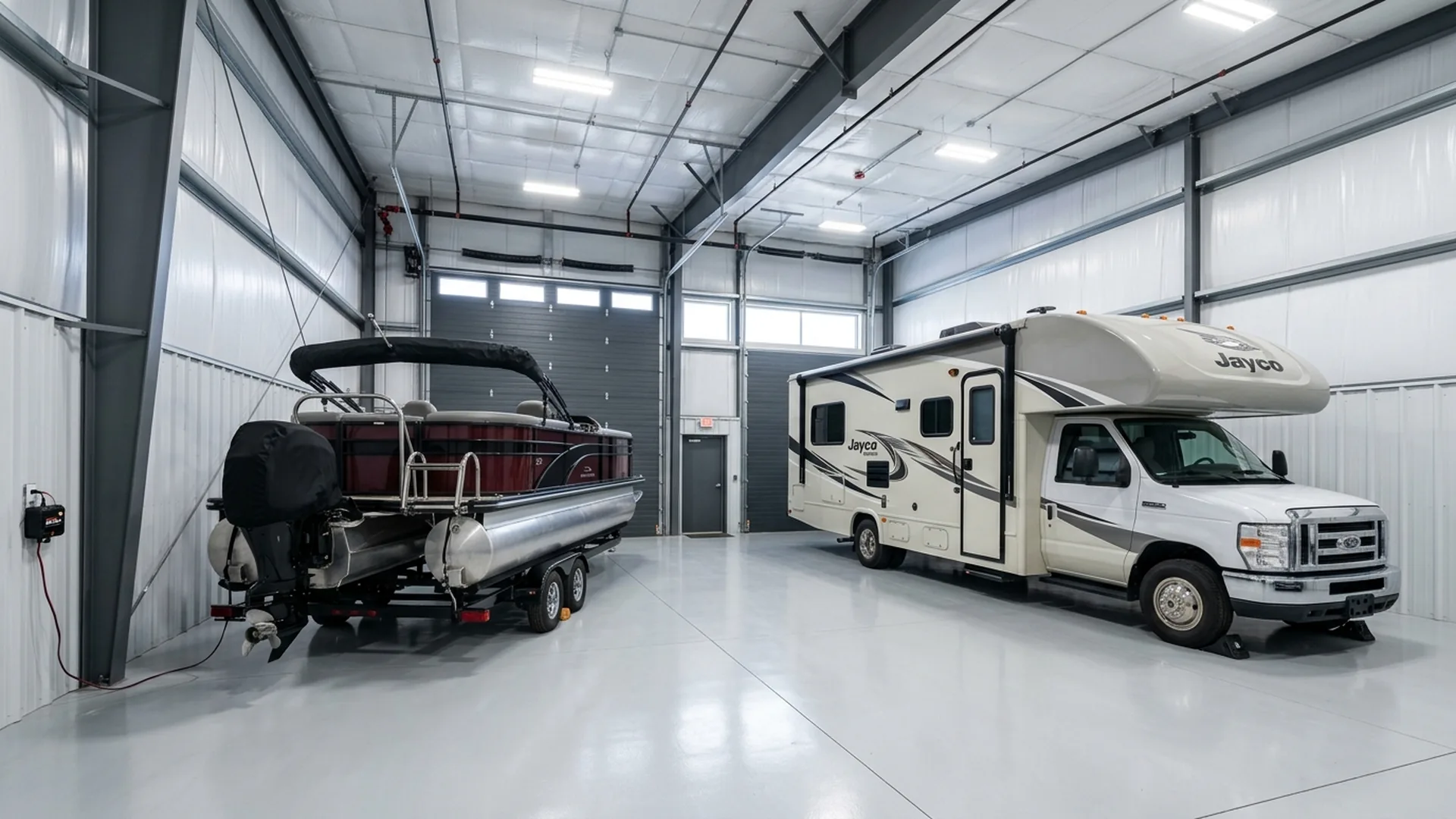
    A pontoon boat and a Class C RV parked side by side in a clean indoor storage bay for winter
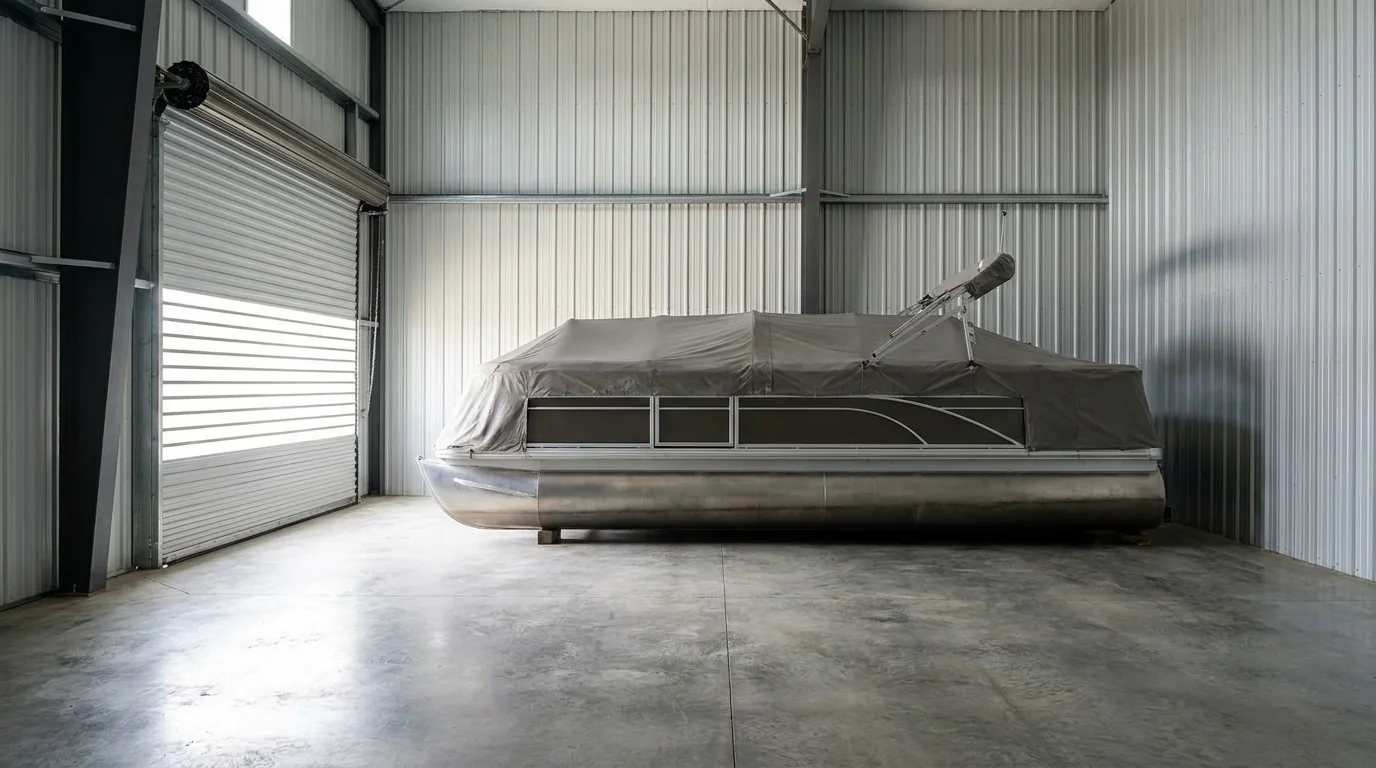
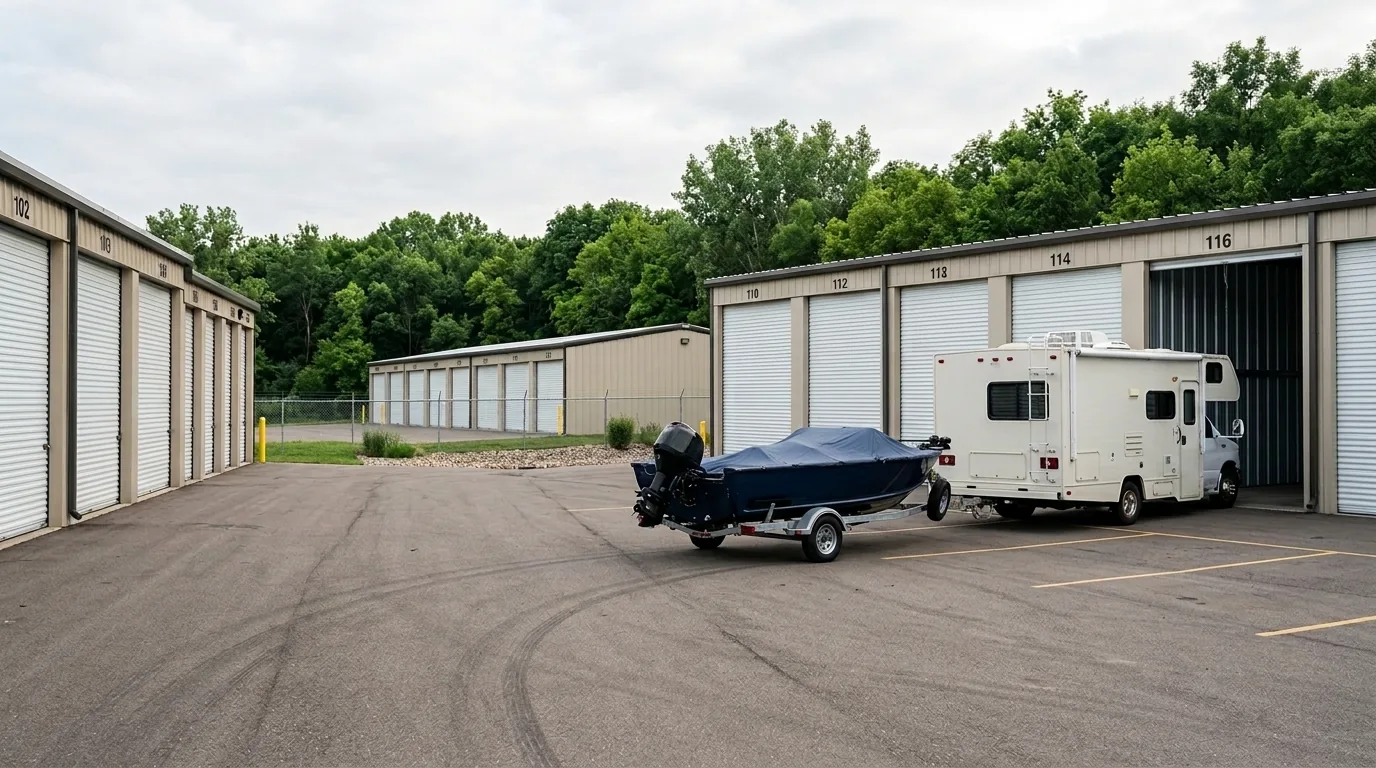
    A pontoon and a motorhome tucked into a dry indoor bay for the winter, battery on a trickle charger.

    The pattern is remarkably consistent every spring. Customers who winterized carefully, including treating the fuel and running the engine, roll out clean on the first warm Saturday. Customers who parked the rig full of untreated pump gas in October come back for a jump-start or a tow.

    The stabilizer step is the one owners most often forget, because it seems minor compared to draining the cooling system or fogging the cylinders. It is not minor. Fuel is what actually gets the engine running in April, and fuel is what most commonly fails after six months in the dark.

    Pair fuel treatment with the rest of the storage prep. If you are also winterizing an RV or a boat, add stabilizer while you are already elbow-deep in the checklist. It takes five extra minutes and it protects everything downstream of the tank.

    Store Indoors, Start Clean in Spring

    Due North Storage offers indoor units up to 14×40 with electricity included, off Highway 10 in the St. Cloud area. Pair proper winterization with a dry, protected bay and skip the spring surprises.

    Frequently Asked Questions

    How long does fuel stabilizer keep gas fresh?

    STA-BIL’s storage formula keeps fresh gasoline usable for up to 24 months when added at the right ratio and treated immediately after purchase. Other marine and small-engine stabilizers offer similar 12 to 24 month windows.

    The key word is fresh: stabilizer preserves good fuel, it does not restore fuel that has already broken down.

    Do I need fuel stabilizer for a boat or RV that sits over winter?

    Yes, and it is one of the cheapest insurance policies you can buy for a stored engine. Untreated E10 gasoline can start breaking down in as little as 30 days.

    Over a Minnesota five to seven month layup it can gum up carburetors, clog injectors, or phase-separate. A few dollars of stabilizer prevents a repair bill.

    Can I use car fuel stabilizer in my boat?

    You can use a general-purpose stabilizer in a boat, but a marine-specific product is a better fit because marine formulas add corrosion inhibitors and moisture control for the wet, humid environment boats live in.

    If the label says marine or dual-purpose, you are covered.

    What is phase separation and can stabilizer prevent it?

    Phase separation happens when ethanol fuel absorbs enough water from the air that the ethanol and water sink to the bottom of the tank as a separate layer. No additive can reverse it, so the tank must be drained.

    Stabilizer helps by slowing moisture uptake, but a nearly full tank is the strongest defense.

    Should I store the tank full or empty?

    Full, to about 95 percent. A nearly full tank leaves almost no room for the humid air that causes condensation.

    Empty tanks let air move in and out with temperature swings, and that airflow is exactly what pulls moisture into the fuel.

    How do I add fuel stabilizer correctly?

    Add stabilizer to a nearly full tank of fresh fuel at the ratio on the label (commonly one ounce per 2.5 gallons for STA-BIL), then run the engine for five to ten minutes so treated fuel reaches the carburetor, injectors, and fuel lines.

    Treating only the tank leaves untreated fuel in the rest of the system, which defeats the point.

    Can old, untreated gas be saved with stabilizer?

    Not really. Stabilizer preserves fresh fuel; it does not restore fuel that has already oxidized or phase-separated.

    If your tank has been sitting untreated for six months, drain it and refill with fresh treated fuel rather than trying to rescue what is in there.

    Final Thoughts

    Fuel stabilizer is one of the highest-return five minutes you can spend on a stored engine. It costs less than a coffee, prevents the most common spring failure by a wide margin, and works across boats, RVs, generators, and every small engine in the garage.

    Treat fresh fuel, top the tank to 95%, run the engine long enough to pull the treated gas through the whole fuel system, and shut it down for the season. Do that, and April starts with a first-try startup instead of a service bill.

    Indoor Boat & RV Storage in Central Minnesota

    Clean, dry indoor units up to 14×40 with electricity included, just off Highway 10 near Saint Cloud and Little Falls. Reserve your spot before the fall rush.

    Sources:
    [1] State of Hawaii DLNR, Division of Boating and Ocean Recreation. Ethanol And Your Marine Engine (E-10). Retrieved 2026-07-28.
    [2] Gold Eagle. STA-BIL Storage Fuel Stabilizer (Product & Usage Guidance). Retrieved 2026-07-28.
    [3] U.S. Department of Energy, Alternative Fuels Data Center. Ethanol Fuel Basics. Retrieved 2026-07-28.
    [4] Mercury Marine. How to Winterize Your Outboard. Retrieved 2026-07-28.
    [5] BoatUS. To Winterize Or Not To Winterize? 2025. Retrieved 2026-07-28.
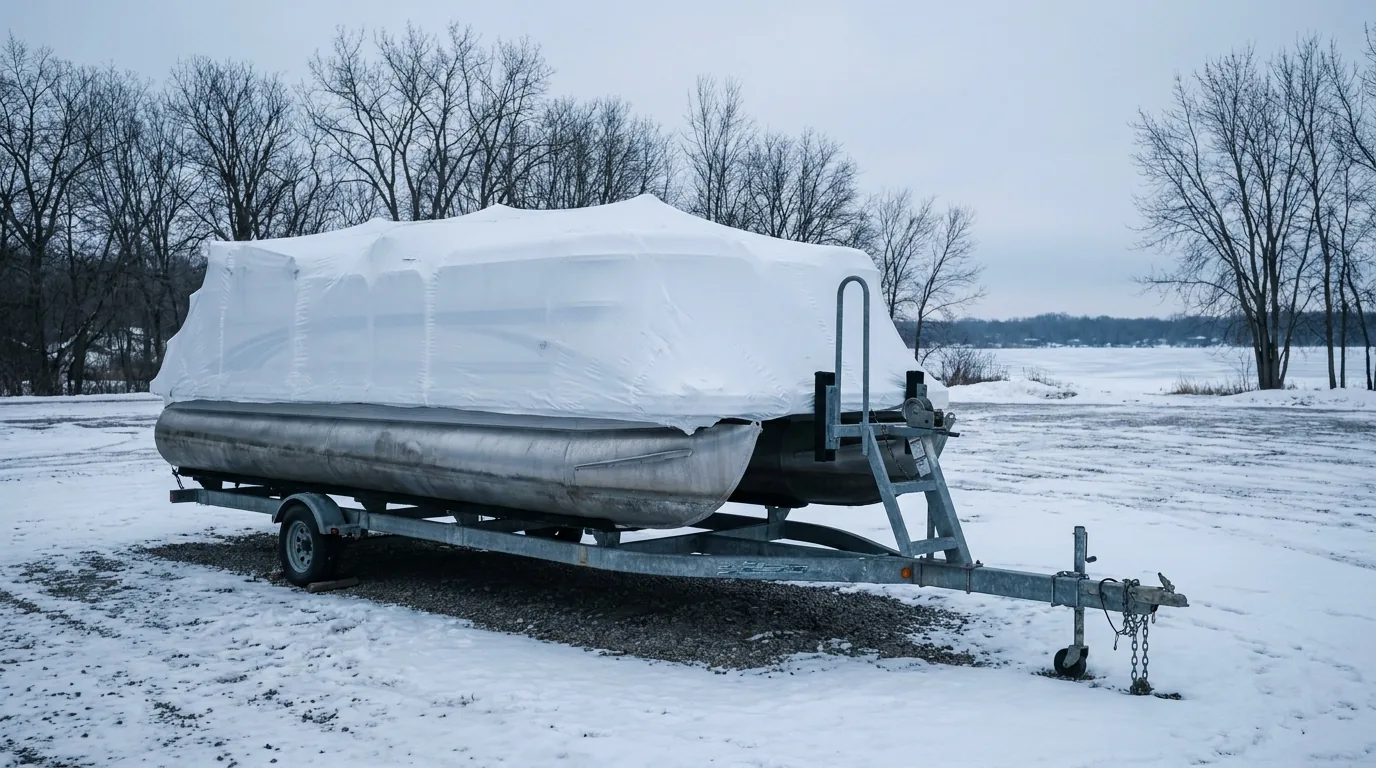
  • Pontoon Winterization 101: Protecting Your Boat Through a Minnesota Winter

    Pontoon Winterization 101: Protecting Your Boat Through a Minnesota Winter

    The worst part of spring for a boat owner isn’t the wait for open water. It’s the pontoon that won’t start. You pull off the cover on the first warm Saturday, turn the key, and get a dead click, or the milky oil that means water froze solid inside the motor while you weren’t looking.

    Water is strange stuff. Almost every liquid shrinks as it gets colder, but water does the opposite once it freezes. It expands about 9% in volume, and it does so with enough force to split cast iron. [1]

    That one quirk of physics is why a forgotten cup of water left in your outboard can turn into a five-figure repair by April. In central Minnesota, where January means a month of sub-zero nights, the question isn’t whether trapped water will freeze. It’s whether any is left in your boat to do the damage.

    This guide walks through the whole job, from the engine to the toons, the way we’d do it for our own boats here in the St. Cloud area. None of it is hard. Most of it is just remembering to do it before the first hard freeze.

    Why Minnesota Winters Are So Hard on Boats

    Minnesota loves its boats. The state ranks first in the nation for watercraft per capita, with roughly one registered boat for every six residents. [2] Most of them sit idle from October to May.

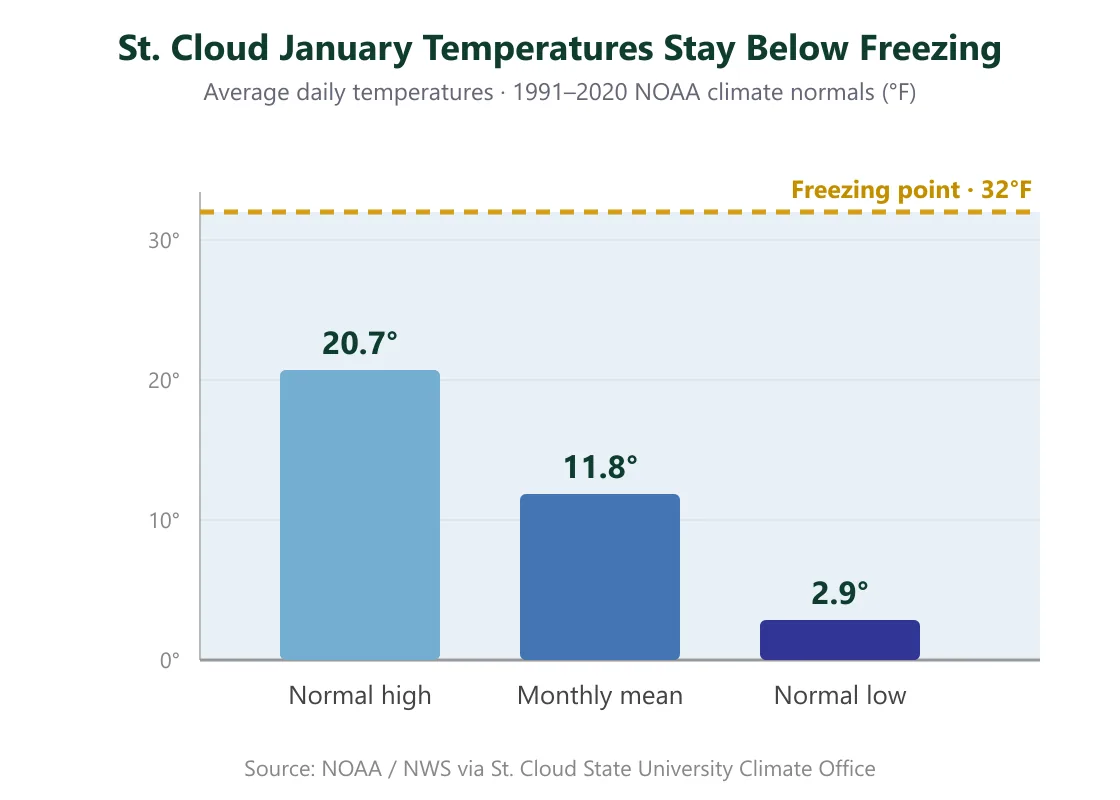
    That long off-season is the problem. Using the 1991–2020 climate normals, the air around St. Cloud never warms up enough in January to thaw anything out. [3] The chart below shows how far below freezing the whole month sits, on average.

    Bar chart of St. Cloud January average temperatures from the 1991 to 2020 NOAA climate normals: normal high 20.7 F, monthly mean 11.8 F, and normal low 2.9 F, all below the 32 F freezing line

    Add water into the mix, and you have a recipe for damage. Water gets into a marine engine’s cooling passages, the exhaust, the gearcase, and the bilge during normal use. Leave it there, let it freeze, and it pries metal apart from the inside.

    Here’s the part owners miss: it isn’t the depth of the cold that breaks a boat; it’s the duration. A single cold night rarely reaches the water deep inside a block. A solid week of it does, every winter, which is exactly what Minnesota delivers.

    What Does Freeze Damage Actually Cost?

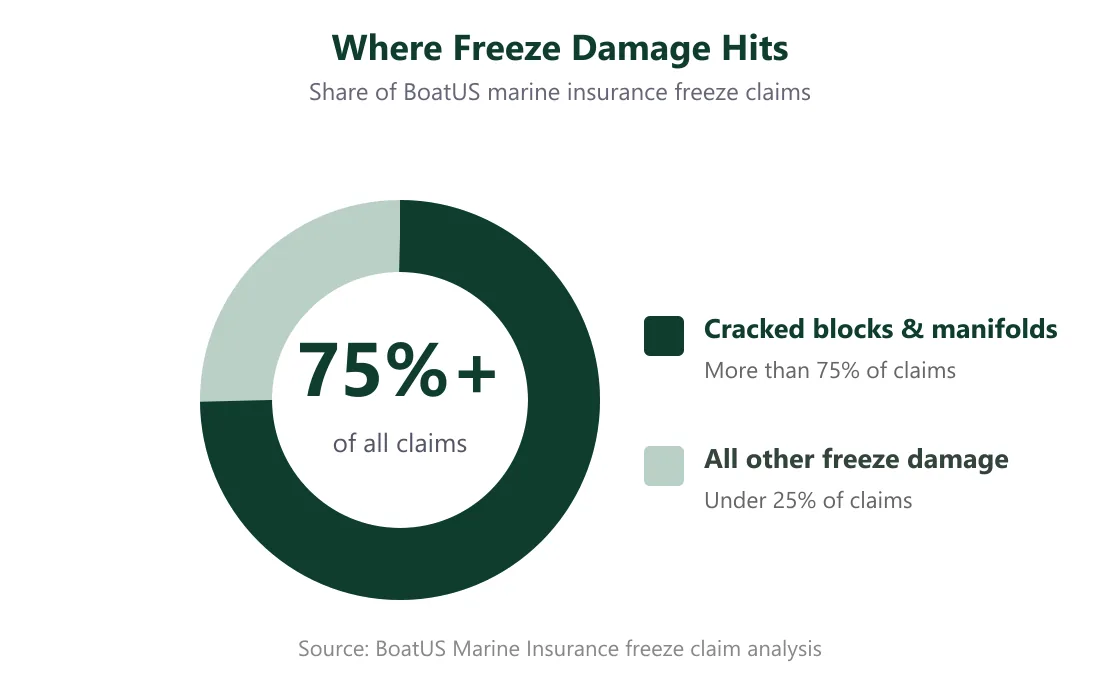
    A lot more than the prevention. When BoatUS analyzed about a decade of its marine insurance freeze claims, it found that the overwhelming majority involved a cracked engine block or exhaust manifold, almost always because water sat in the engine or cooling system through a freeze. [4] The chart below shows how lopsided the claim mix is.

    Donut chart showing more than 75 percent of BoatUS marine insurance freeze claims are cracked engine blocks or exhaust manifolds, with under 25 percent all other freeze damage

    The bill is brutal. Replacing even a small outboard can top $10,000 before labor, and a cracked block can total an older motor outright. Across the country, BoatUS estimates improper storage causes more than $50 million in preventable damage every year. [5]

    The encouraging flip side: BoatUS says its winterizing guidance addresses the reasons behind more than 95% of the freeze claims it handled over the past decade. [4] In other words, this is a problem you can almost entirely engineer away with an afternoon of work and a few gallons of antifreeze.

    How Do You Winterize the Engine and Fuel System?

    The engine is where freeze claims are won or lost, so start here. The goal is simple: get the water out, get oil onto bare metal, and keep the fuel from going bad. Mercury Marine’s outboard procedure covers all three. [6]

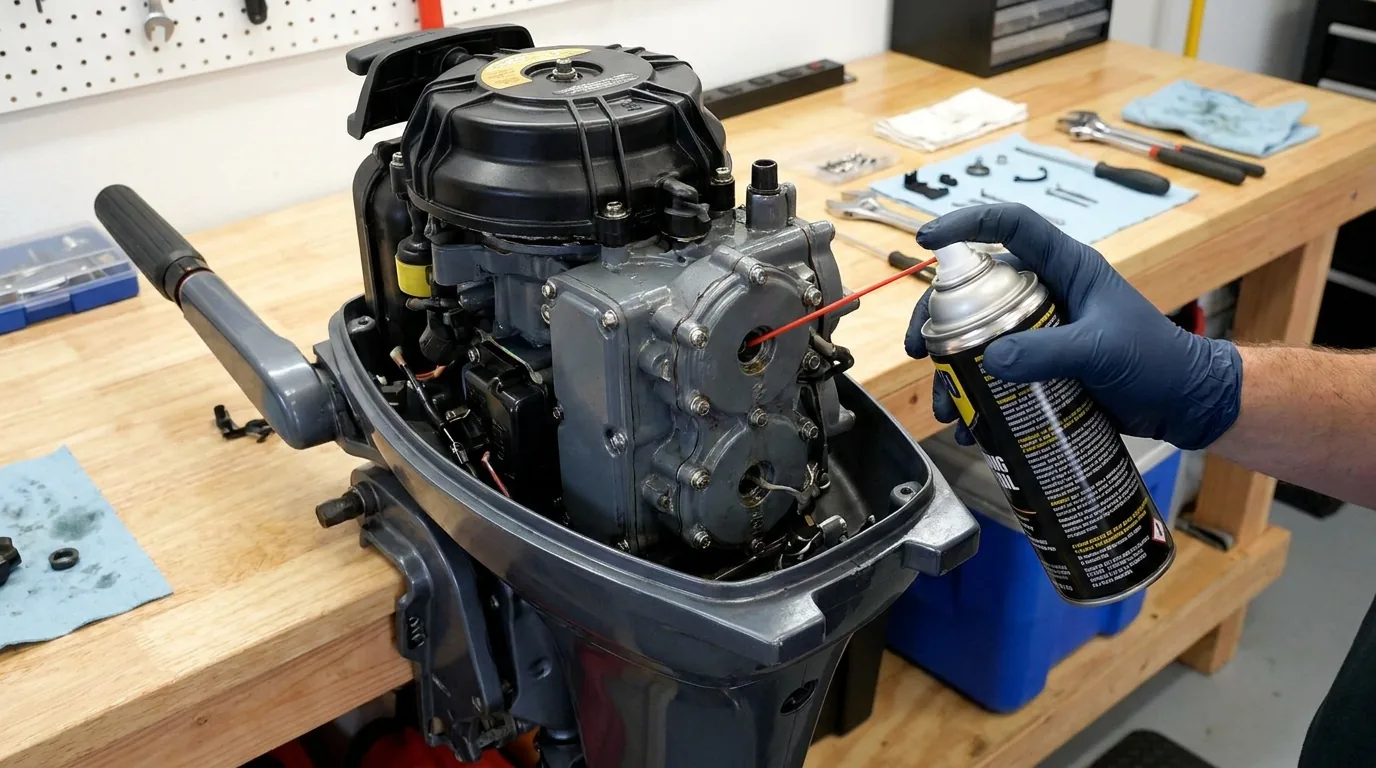
    A gloved hand spraying fogging oil into an outboard motor on a garage workbench during winterization

    Drain the Water and Add Antifreeze

    Run the motor to operating temperature, then drain the cooling system fully and circulate marine (propylene glycol) antifreeze until it runs out the prop. This pushes out any pockets of plain water that would otherwise freeze and crack a passage.

    Fog the Cylinders

    With the engine warm, spray fogging oil into the cylinders through the spark-plug holes or the air intake. [6] The oil film stops the cylinder walls from rusting while the boat sits for seven months.

    Change the Lower-Unit Gear Lube

    Drain the gearcase and check the old lube. If it looks milky or chocolate-colored, water has gotten in past a seal. That trapped water can freeze and crack the lower unit, so refill with fresh gear oil before storage, not after.

    Treat and Top Off the Fuel

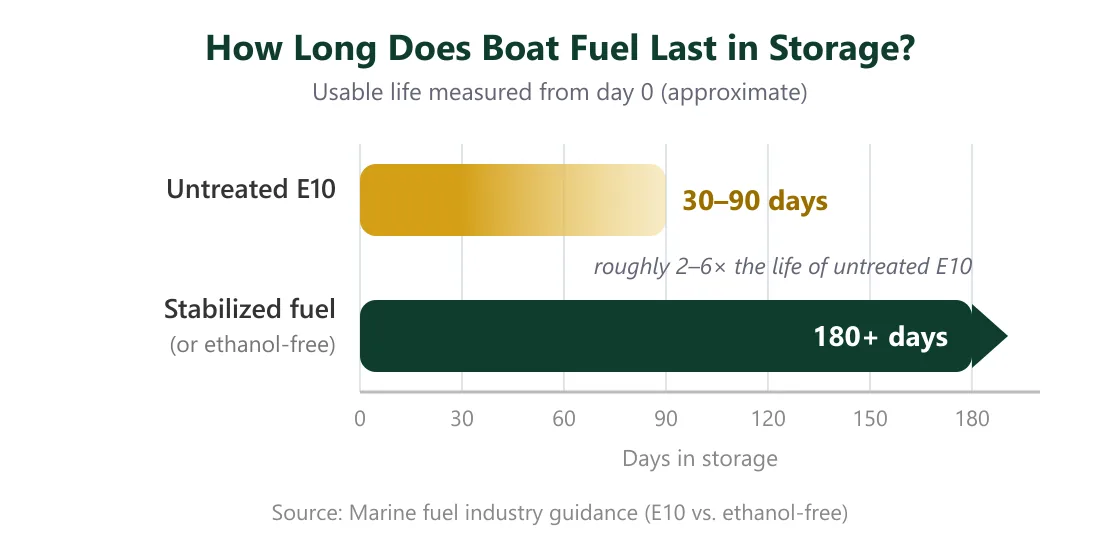
    This step trips up more owners than any other, because of ethanol. Most pump gas is E10, and ethanol is hygroscopic, meaning it pulls water straight out of the air. Untreated E10 breaks down fast in storage, while stabilized or ethanol-free fuel holds up much longer. The chart below shows the gap. [7]

    Bar chart comparing boat fuel storage life: untreated E10 gasoline lasts 30 to 90 days while stabilized or ethanol-free fuel lasts 180 or more days

    The bigger risk with ethanol is water. Once a tank absorbs enough, the fuel undergoes phase separation, which no additive can reverse, so the tank has to be drained.

    The fix is easy. Fill the tank to about 95%, add a marine fuel stabilizer, and run the engine a few minutes so treated fuel reaches the carburetor or injectors. A nearly full, stabilized tank leaves almost no room for condensation to form.

    How Should You Store a Marine Battery in the Cold?

    Cold is hard on batteries, but a dead battery is the one that actually breaks. A fully charged lead-acid battery’s electrolyte stays liquid down to about −67°F. As it discharges, the freezing point climbs fast: a badly run-down battery can freeze near 5°F, and its case can crack. [8] With St. Cloud’s average January low well below that, a weak battery is squarely inside the danger zone.

    A 12-volt marine battery on a workbench connected to an automatic trickle charger with a green light

    Cold also robs you of usable power. A battery near freezing delivers well under its rated capacity, and one left to self-discharge all winter slowly slides toward that vulnerable, freezable state. [8]

    What to Do

    • Charge it fully before storage. Never put away a battery that’s even half down.
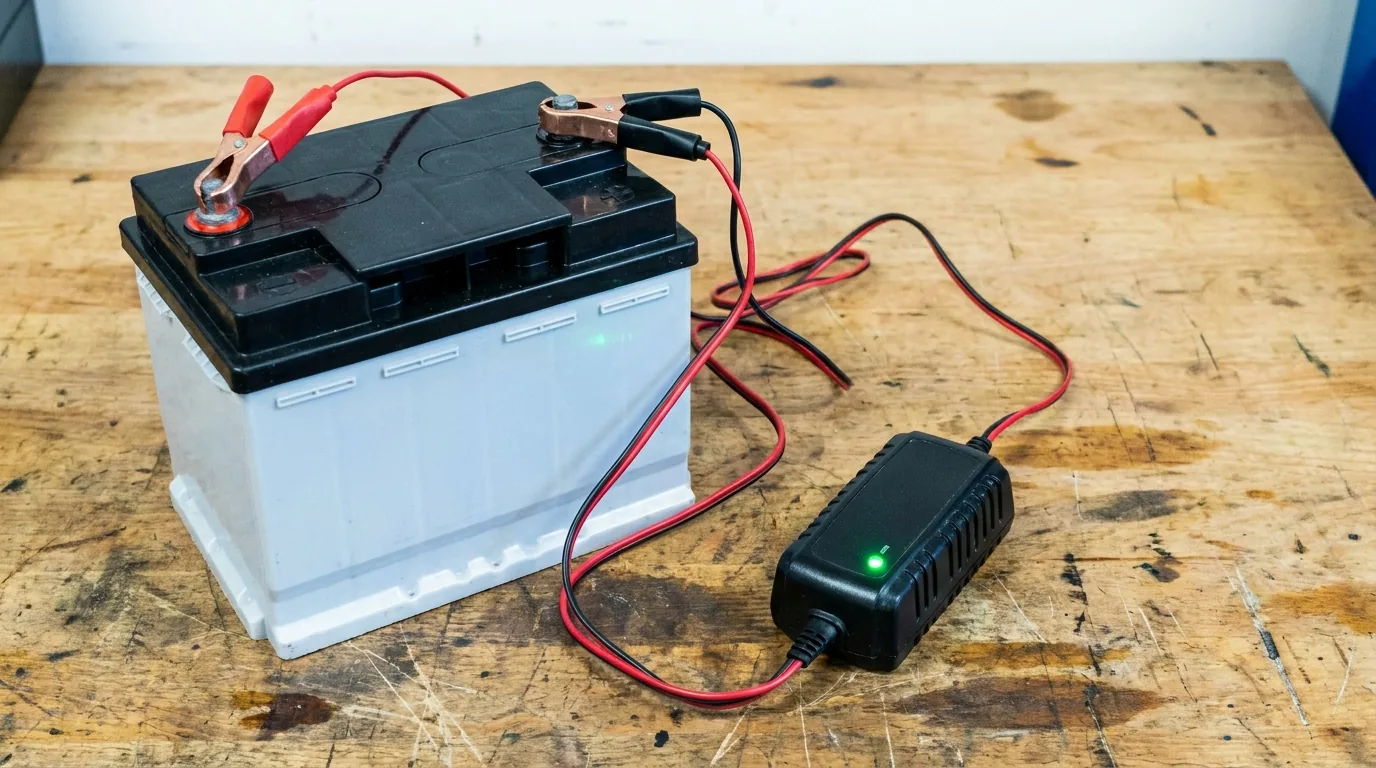
    • Keep it on a maintainer. A small automatic trickle charger holds the charge without overcooking the cells.
    • Store it dry and off concrete if you can, on a shelf or a board. A heated space is ideal but not required as long as it stays charged.
    • Clean the terminals and give them a light coat of dielectric grease to fend off corrosion.

    Pontoon-Specific Problems You Can’t Ignore

    A pontoon isn’t just a boat with a flat deck. The toons, the furniture, and the open layout create a few headaches that a fishing boat never deals with. Three matter most over a Minnesota winter.

    Mice Love a Stored Pontoon

    Rodents treat a covered pontoon like a heated cabin: dry, sheltered, and full of nesting material. Discover Boating recommends pulling out all food, removing cushions and seats where mice nest, and protecting wiring with rodent tape before storage. [9]

    Be skeptical of the folk remedies, too. Mothballs, dryer sheets, and human hair all get passed around as mouse repellents, but we’ve seen plenty of chewed wiring on boats that were “protected” by a box of dryer sheets. Bet on rodent tape and a stripped, cushion-free interior instead.

    Trapped Moisture Means Mildew

    Pontoon seats are vinyl over foam, and that foam holds water. Seal a damp boat under a non-breathable tarp, and you build a greenhouse: condensation forms, can’t escape, and mildew blooms across every cushion by spring.

    Ventilation is the whole game. A breathable, fitted cover or a properly vented shrink-wrap job lets vapor out while keeping snow and rodents off. A blue poly tarp cinched down tight does the opposite.

    Aluminum and Standing Water

    Aluminum toons resist rust, but they don’t love sitting in slush and road salt all winter, and trapped water inside a toon can freeze. Rinse the pontoons after haul-out, drain them if they have drain plugs, and get the boat up off bare ground so air can move underneath.

    Where You Store the Boat Matters as Much as How

    A covered pontoon boat parked inside a clean indoor self-storage unit with a concrete floor

    You can do every winterizing step perfectly and still lose ground if the boat spends five months under a snowbank. Where it sits decides how much weather, moisture, and critter pressure it has to survive.

    Outdoor storage is the riskiest. Snow load can crush a cover and crack a frame, sun and wind shred wrap, and salt-laden slush works on the aluminum and fasteners. Even a good shrink-wrap job is fighting the elements all winter long.

    Indoor, ventilated storage removes most of those variables at once. No snow load, no UV, no blowing salt, and far less of the wild humidity swing that drives mildew. The boat comes out in spring looking the way it went in.

    What We See at Due North Storage

    The pontoons that give owners trouble in spring almost never fail because of one big mistake. They failed from a stack of small ones: a little water left in the motor, a half-charged battery, a tarp cinched down over damp seats.

    The boats that come out ready to launch were winterized properly and then kept somewhere dry and out of the weather. That combination is the whole secret.

    Store Your Pontoon Indoors This Winter

    Due North Storage offers clean, dry indoor units up to 14×40 with electricity included, with easy access just off Highway 10 in the St. Cloud area. Winterize the boat, roll it in, and forget about it until spring.

    The Pontoon Winterization Checklist

    Pull it all together and the job is one afternoon. Here’s the order we’d run it in:

    Frequently Asked Questions

    When Should I Winterize My Pontoon in Minnesota?

    Aim to finish before the first hard freeze, which in central Minnesota often arrives in October. Once overnight lows are reliably below freezing, any water left in the engine is at risk. Don’t wait for the lakes to ice over, since the damage can happen weeks earlier.

    Can I Just Cover the Boat Instead of Fully Winterizing It?

    No. A cover keeps snow and rodents off, but it does nothing about the water inside the engine, gearcase, and cooling system. With St. Cloud’s January mean well below freezing, that trapped water will freeze and expand, which is what cracks blocks and manifolds. Cover and winterize.

    Do I Really Need to Fog the Engine?

    Yes, if you want the cylinders to survive a seven-month layup. Fogging oil leaves a film that prevents surface rust on the cylinder walls while the motor sits unused. Mercury Marine includes it as a standard step in outboard winterization, and skipping it is a common cause of spring hard-starting.

    Why Does Ethanol Fuel Matter So Much for Winter Storage?

    Ethanol absorbs water from the air, and untreated E10 can start breaking down in 30 to 90 days. If enough water builds up, the fuel phase-separates and no additive can fix it, so the tank must be drained. A nearly full tank with marine stabilizer prevents both problems.

    Is Indoor Storage Worth the Cost for a Pontoon?

    For most owners, yes. Indoor storage eliminates snow load, UV fading, road-salt corrosion, and the humidity swings that grow mildew on vinyl seats. Given that replacing even a small engine can top $10,000, a winter of dry indoor storage is modest protection for a major asset.

    Final Thoughts

    Freeze damage to a pontoon is almost never bad luck. It traces back to water left where it shouldn’t be, fuel that wasn’t treated, or a battery that drifted dead in the cold. Every one of those is preventable in a single afternoon.

    Drain the water, fog the engine, stabilize the fuel, charge the battery, and tuck the boat somewhere dry. Do that, and your pontoon comes out next May ready for the first warm Saturday on the lake instead of a tow to the repair shop.

    Indoor Boat Storage in Central Minnesota

    Clean, dry indoor units up to 14×40 with electricity included, just off Highway 10 in the St. Cloud area. Reserve your pontoon’s winter home before the season fills up.

    Sources:
    [1] U.S. Geological Survey, Water Science School. Water Density. Retrieved 2026-06-29.
    [2] Minnesota DNR. Boating, Canoeing and Kayaking (Minnesota Facts). Updated May 2025.
    [3] NOAA / National Weather Service, via St. Cloud State University Climate Office. January Normal Data for Saint Cloud, Minnesota (1991–2020). Retrieved 2026-06-29.
    [4] BoatUS. Your Boat Engine’s Chillin’ (Winterizing). Retrieved 2026-06-29.
    [5] BoatUS. To Winterize Or Not To Winterize? 2025, retrieved 2026-06-29.
    [6] Mercury Marine. How to Winterize Your Outboard. Retrieved 2026-06-29.
    [7] State of Hawaii DLNR, Division of Boating and Ocean Recreation. Ethanol And Your Marine Engine (E-10). Retrieved 2026-06-29.
    [8] Battery University (Cadex). BU-410: Charging at High and Low Temperatures. Retrieved 2026-06-29.
    [9] Discover Boating. How to Keep Rodents Off Your Boat in the Offseason. Retrieved 2026-06-29.

  • What Size Storage Unit Do I Need? Boat, RV & Camper Sizing Guide

    What Size Storage Unit Do I Need? Boat, RV & Camper Sizing Guide

    The quick answer: measure your whole rig from bumper to trailer tongue, add a couple of feet of working room, and match that to the next unit size up. For most boats and campers, that lands at a 10×30. For a full motorhome, it is usually a 12×40 or 14×40.

    The trap is measuring just the hull or just the coach. The trailer, the tongue, and the height on the trailer are what jam people in the doorway on move-in day.

    Picture the first cold Saturday in October. You back the boat up to the unit you reserved over the phone, hop out to swing the door open, and the trailer tongue is still hanging a foot past the threshold. Now you are stuck in the doorway, holding up the line behind you, calling the office to ask if anything bigger is open.

    That scene plays out every fall, and it is almost always a measuring problem, not a bad-luck problem. Minnesota stores more boats per person than any other state, with roughly one registered boat for every six residents. [1] Add in the motorhomes, fifth wheels, and pop-ups, and a lot of garages around here simply run out of room by October.

    So you start shopping for a unit, and the size chart leaves you guessing. Here is how to size it right the first time.

    The One Rule That Decides Your Unit Size

    Size to the footprint your rig actually occupies on the ground, not the length printed in the sales brochure. Brochure length almost always undercounts, because it leaves off the trailer tongue, the swim platform, the spare tire, and the bumper rack.

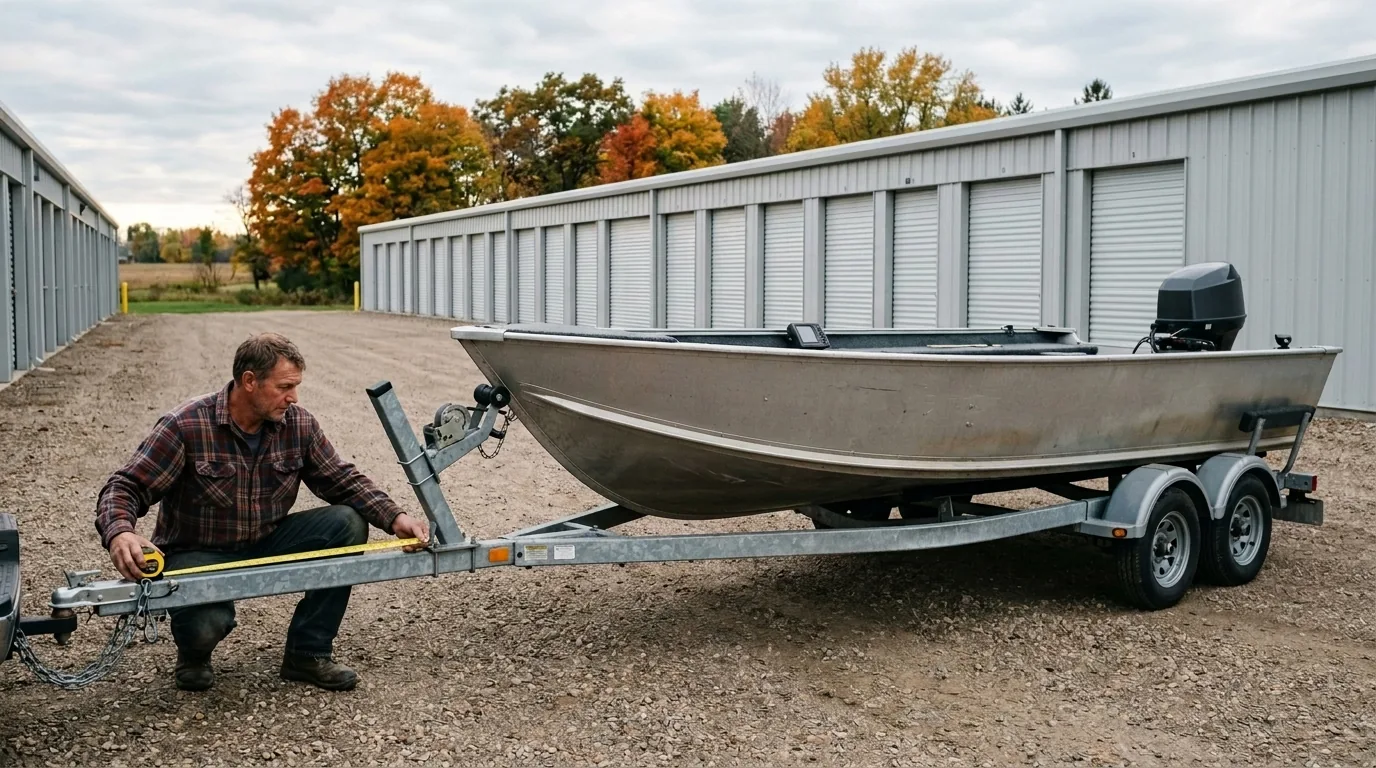
    A boat trailer is measured from the coupler at the tip of the tongue all the way to the rearmost point, so the trailer is usually longer than the boat sitting on it. [2] That gap is where the trouble usually starts.

    Then add buffer. You want 2 to 4 feet of extra length so you can close the door behind the rig, and about a foot of extra width so you can walk down one side. Snug is not the goal. You will be backing in and out in the dark, in winter gear.

    What Size Storage Unit Do I Need for a Boat?

    Most trailered recreational boats in Minnesota fit a 10×30 unit once you account for the trailer, and that covers the majority of fishing boats, bowriders, and smaller pontoons. Larger pontoons, wakeboard boats, and cabin cruisers move up to a 12×40.

    The two dimensions boaters overlook are the tongue and the beam. The tongue adds 2 to 5 feet of length beyond the hull. Pontoons run wide, often 8.5 to 10 feet across the deck, which eats into a narrow unit faster than length does.

    Man measuring the bumper-to-coupler length of an aluminum fishing boat on its trailer outside a row of storage units
    Boat type Hull length Length with trailer Unit that fits
    Jon boat / small aluminum fishing 12–16 ft ~16–20 ft 10×20
    Fishing boat / bowrider 17–20 ft ~21–25 ft 10×30
    Pontoon (mid-size) 18–22 ft ~22–27 ft 10×30 (watch the width)
    Ski / wakeboard boat 20–24 ft ~24–29 ft 12×30 to 12×40
    Cabin cruiser 26–32 ft ~30–37 ft 12×40 to 14×40

    Do not forget height. A boat sits up high on its bunks, so a tower, a T-top, or a tall windshield can add several feet. Measure to the highest point and make sure it clears the door, not just the ceiling.

    What Size Storage Unit Do I Need for an RV or Motorhome?

    RV sizing comes down to class, and the lengths vary a lot. A Class B camper van slips into a 10×30, while a 40-foot Class A diesel pusher needs a 14×40 with a tall door. Class C and most travel trailers land comfortably in the middle.

    RV ownership keeps climbing, with U.S. shipments reaching 342,220 units in 2025, up 2.5 percent over the year before. [3] More rigs on the road means more owners hunting for a unit that actually fits in the fall.

    Here is the part that trips owners up: length tells you the floor, but height tells you the door. Most RVs stand 10 to 13.5 feet tall. [4] And a travel trailer’s listed length is box length only, so the hitch adds another 2 to 5 feet to what you actually store.

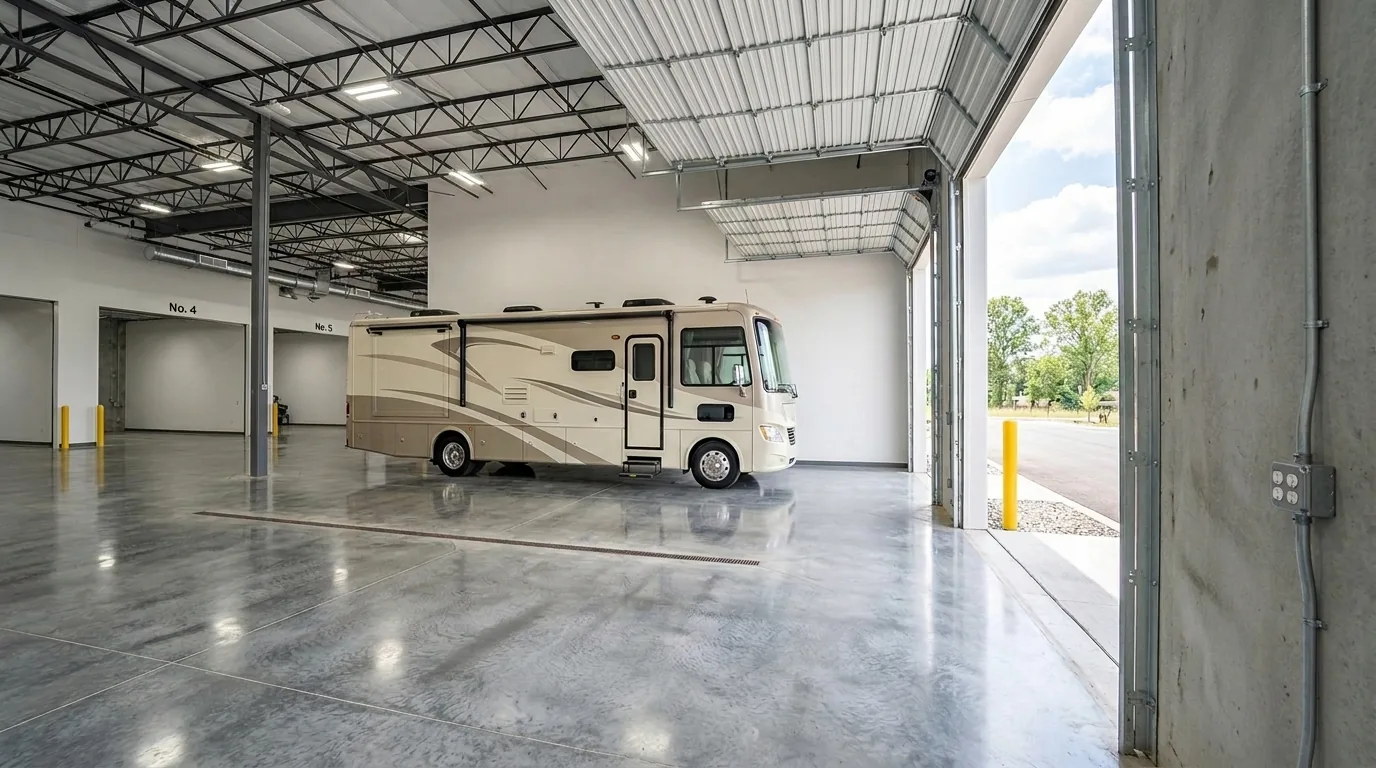
    A Class A motorhome parked inside a clean indoor drive-in storage bay with a tall open roll-up door and an electrical outlet on the wall

    Standard RV width is 8 feet 6 inches, [5] so width is rarely the problem. Door height and total hitched length are what decide whether your motorhome is a 12-foot-wide unit or a 14-foot one.

    What Size Storage Unit Do I Need for a Camper or Travel Trailer?

    Towables are the most common rigs we store, and they span the widest range. A collapsed pop-up tucks into a 10×20, a mid travel trailer fits a 12×30, and a big fifth wheel or toy hauler needs the full 14×40 with a tall door.

    With a camper, the floorplan number is the thing that fools people. A trailer sold as a “26-footer” measures box length only. With the tongue and bumper rack, the real stored length is closer to 29 or 30 feet.

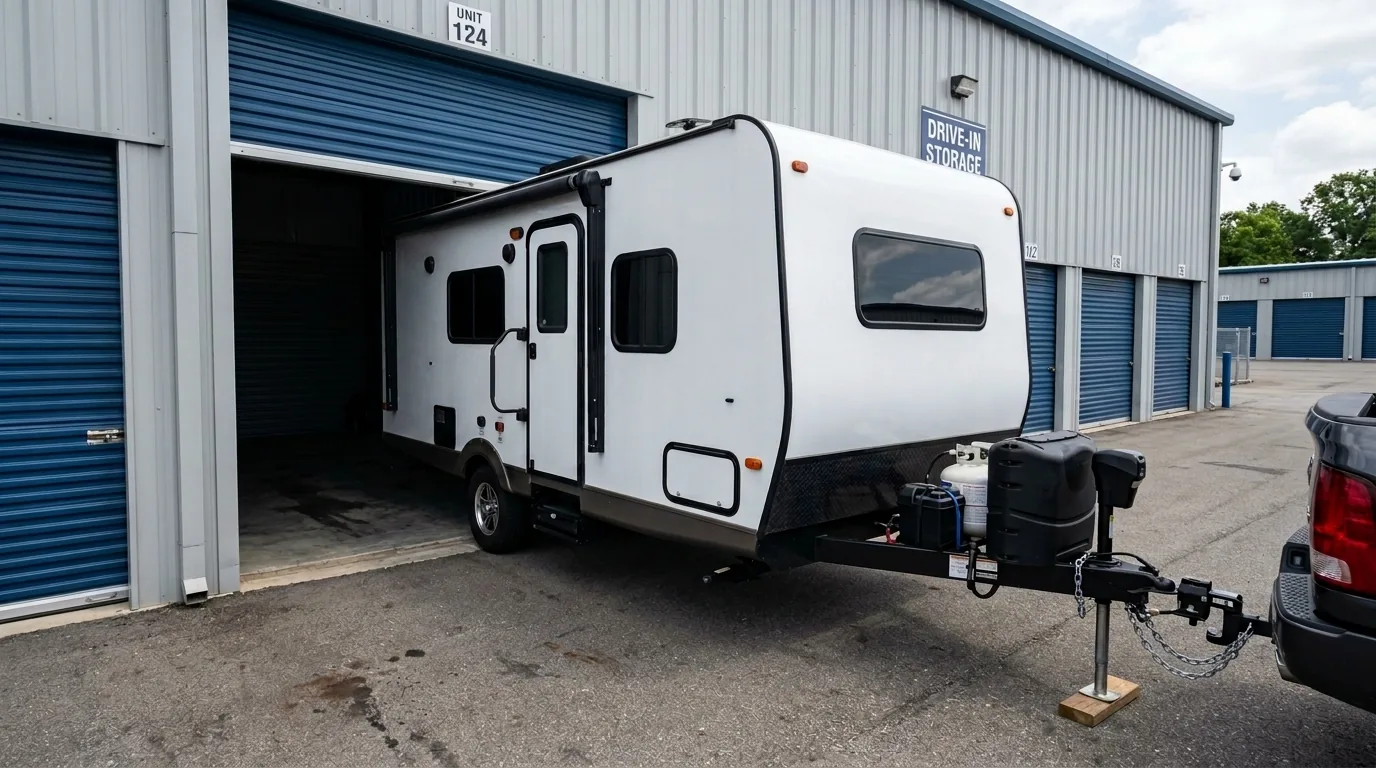
    White travel trailer with A-frame hitch and tongue jack backed up to the open door of an indoor drive-in storage unit
    Camper type Length (with hitch) Height Unit that fits
    Pop-up/folding (collapsed) ~10–18 ft under 5.5 ft 10×20
    Small travel trailer ~16–24 ft 10–11 ft 10×30
    Mid/large travel trailer ~25–38 ft 11–13.5 ft 12×30 to 12×40
    Fifth wheel ~28–48 ft 12–13.5 ft 14×40
    Toy hauler ~26–46 ft 11–13 ft 14×40

    Fifth wheels deserve a special note. The kingpin overhang that rides over the truck bed adds height at the front, and the overall length runs long. When in doubt with a fifth wheel, size up.

    Storage Unit Sizes and What Actually Fits

    Once you have your three numbers, the unit chart gets simple. Storage bays are sold by floor footprint, but for vehicles, the door dimensions matter just as much. Here is how the common sizes shake out for boats, RVs, and campers.

    Unit size Best for Rough fit
    10×20 Pop-up campers, jet skis, small fishing boats, motorcycles Rigs under ~18 ft
    10×30 Fishing boats, bowriders, mid pontoons, small trailers, Class B vans Rigs ~18–28 ft
    12×30 / 12×40 Class C, mid-to-large travel trailers, ski boats Rigs ~28–38 ft
    14×40 Class A motorhomes, large fifth wheels, toy haulers, big pontoons Rigs up to ~40 ft, up to ~14 ft tall

    When your measurement falls right on the line between two sizes, take the larger one. The few extra dollars a month buy you a buffer for gear, easier maneuvering, and room to walk around the rig for off-season checks.

    Not sure which size you need? We will measure it with you.

    Due North Storage offers indoor units up to 14×40 with electricity included, just off Highway 10 in the St. Cloud area. Tell us your rig and we will point you to the right bay.

    Why Door Height and Width Matter as Much as Length

    A unit can be plenty long and still turn you away at the threshold. The roll-up door opening is almost always shorter than the interior ceiling, so the door clearance is the number that decides whether your rig goes in at all.

    Height catches boat owners with towers and RV owners with rooftop air conditioners. A coach listed at 12 feet tall can hit 13 feet once you count the A/C shroud, the antenna, and the trailer height underneath.

    Width matters for the wide loads: pontoons, fifth wheels with slide-outs retracted, and dual-axle trailers. You also need room to open a door, walk the side, and not scrape a mirror on the way in.

    Why So Many Minnesota Owners Store Off-Site

    Two things push boats and RVs out of the driveway here: rules and winter. Many homeowners associations and city ordinances limit how long an RV or boat can sit in a driveway or front yard, and some cap it by length entirely.

    Then there is the season. A rig parked outside through a Minnesota winter takes the full beating of snow load, freeze-thaw, and ice. An enclosed unit with power lets you keep a trickle charger on the battery and the cabin dry until spring.

    That combination is why the off-season pickup line gets long. The owners who reserved a properly sized indoor unit in October are the ones rolling out clean and ready in May.

    Due North runs indoor facilities across central Minnesota, with premium vehicle units in Saint Cloud, Little Falls, Milaca, and Sauk Centre. Each one carries the larger bays that boats, campers, and motorhomes need.

    What We See at Due North Storage

    The most common sizing mistake we watch happen is the boat owner who measured the hull and forgot the trailer. They booked to the 19-foot number, then showed up with a 24-foot rig and nowhere to put the extra five feet.

    Right behind it is the height surprise. A customer is sure their camper “clears 12 feet,” then the rooftop A/C catches the top of the door track. Both are avoidable with one tape measure and five minutes before you reserve.

    Our honest advice: bring us your three numbers, length, width, and height as the rig sits hitched. We would rather put you in the right bay on day one than watch you wrestle a too-small door in November.

    Frequently Asked Questions

    What size storage unit do I need for a 24-foot boat?

    A 24-foot boat usually needs a unit around 28 to 30 feet long once you add the trailer tongue, so a 10×30 or 12×30 is the right target. Check the beam too, since pontoons and wider hulls can crowd a 10-foot-wide bay.

    Always measure the tallest point with the boat on the trailer to confirm it clears the door.

    Will a Class A motorhome fit in a 12-foot-wide unit?

    Usually yes on width, since RVs are capped near 8 feet 6 inches, but a 40-foot Class A needs the length and door height of a 14×40 to move in and out easily. Many Class A coaches stand close to 13.5 feet tall.

    For a full-size diesel pusher, a 14×40 with a tall door is the safer choice.

    How much extra length should I add for the trailer?

    Add 2 to 5 feet beyond the hull or camper box for the trailer tongue and coupler. Boats sit on a frame that extends past the stern, and travel trailers list box length only, leaving off the hitch.

    When the total lands between two unit sizes, choose the larger one for easier parking.

    Does storage unit height really matter for an RV?

    Yes, and it is the number owners miss most often. Most RVs stand 10 to 13.5 feet tall, and rooftop air conditioners, antennas, and the trailer height push the real clearance higher.

    The roll-up door opening, not the interior ceiling, is the dimension that decides if your rig fits. A 14-foot door clears nearly all of them.

    Is an indoor unit worth it over outdoor parking in Minnesota?

    For a Minnesota winter, an enclosed unit protects your rig from snow load, ice, and freeze-thaw damage that outdoor parking cannot. Units with electricity also let you keep a battery maintainer running through the off-season.

    The protection usually pays for itself the first spring you skip a weather-related repair.

    What is the most common RV and boat storage size?

    The 10×30 handles most trailered fishing boats, mid pontoons, and smaller campers, while the 14×40 covers the big motorhomes and fifth wheels. Class C rigs and mid travel trailers sit in between at 12×30 to 12×40.

    Match the unit to your measured length, width, and height rather than the class name alone.

    Reserve the right-sized bay before the fall rush.

    Indoor units up to 14×40 with electricity included, just off Highway 10 in the St. Cloud area. Give us your rig’s length, width, and height, and we will get you into the unit that fits.

    Sources:
    [1] Minnesota Department of Natural Resources. Boating and canoeing facts. Updated May 2025. Retrieved 2026-06-29.
    [2] etrailer.com. How to Determine the Length of a Trailer. Retrieved 2026-07-08.
    [3] RV Industry Association. RV Shipments End 2025 at 342,220 Units, Modest 2.5% Growth Over 2024. December 2025. Retrieved 2026-06-29.
    [4] RecNation Storage. RV Dimensions: Trailer Length, Width, and Height Explained. December 10, 2025. Retrieved 2026-06-29.
    [5] Legal Information Institute, Cornell Law School. 23 CFR § 658.15, Width. Retrieved 2026-07-08.